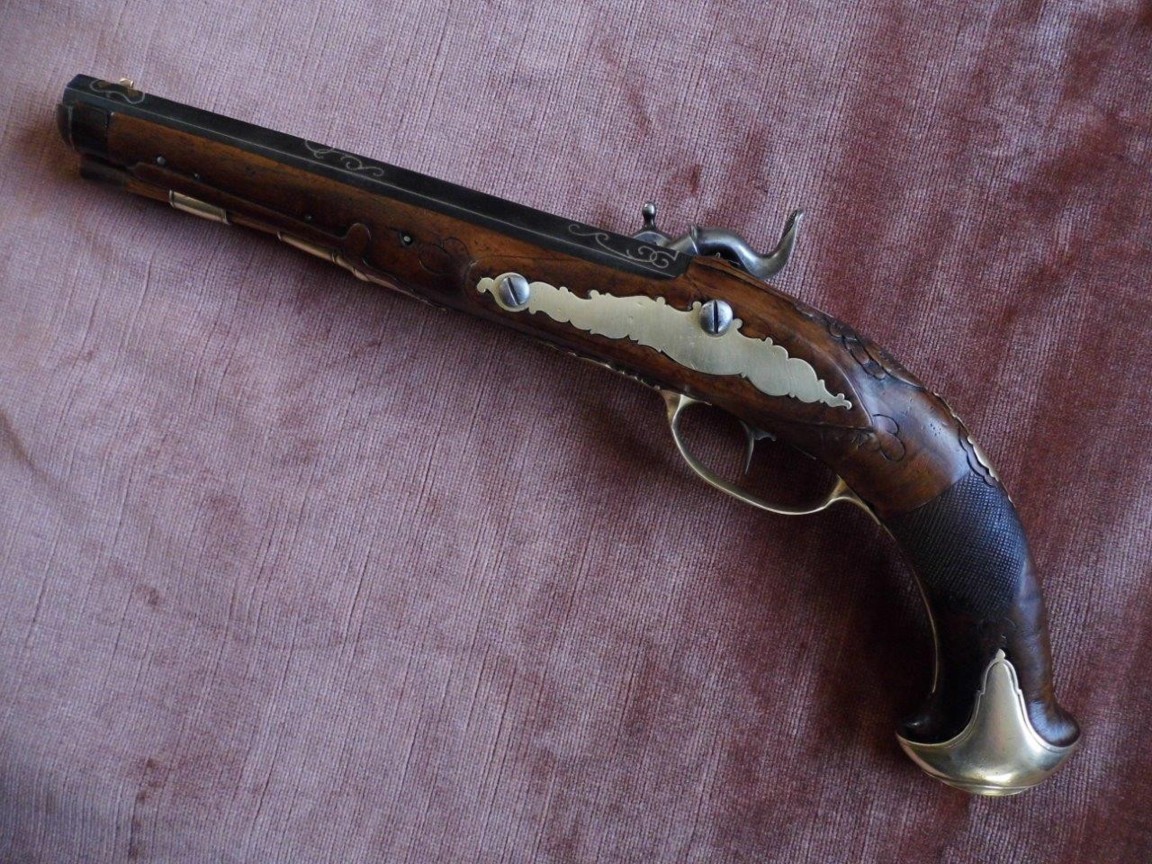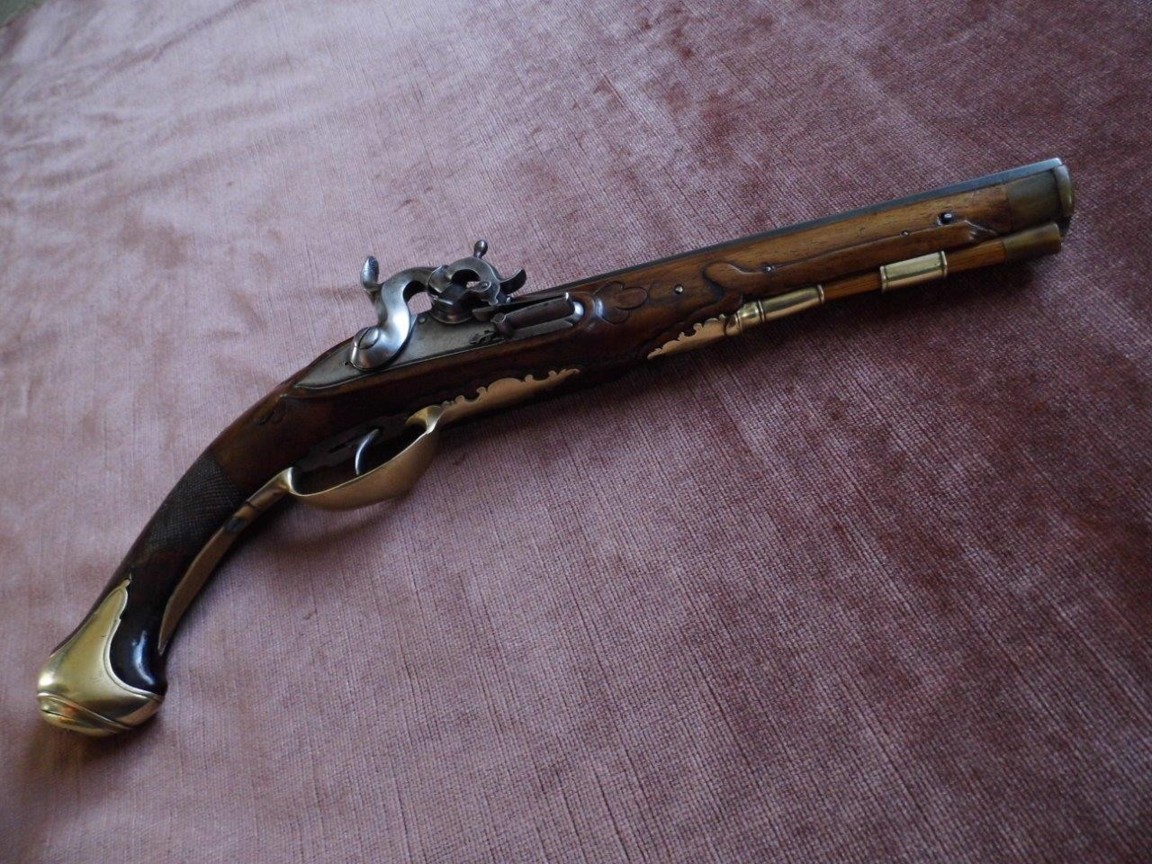
Kuchenreiter Johann Christoph (2ème du prénom)
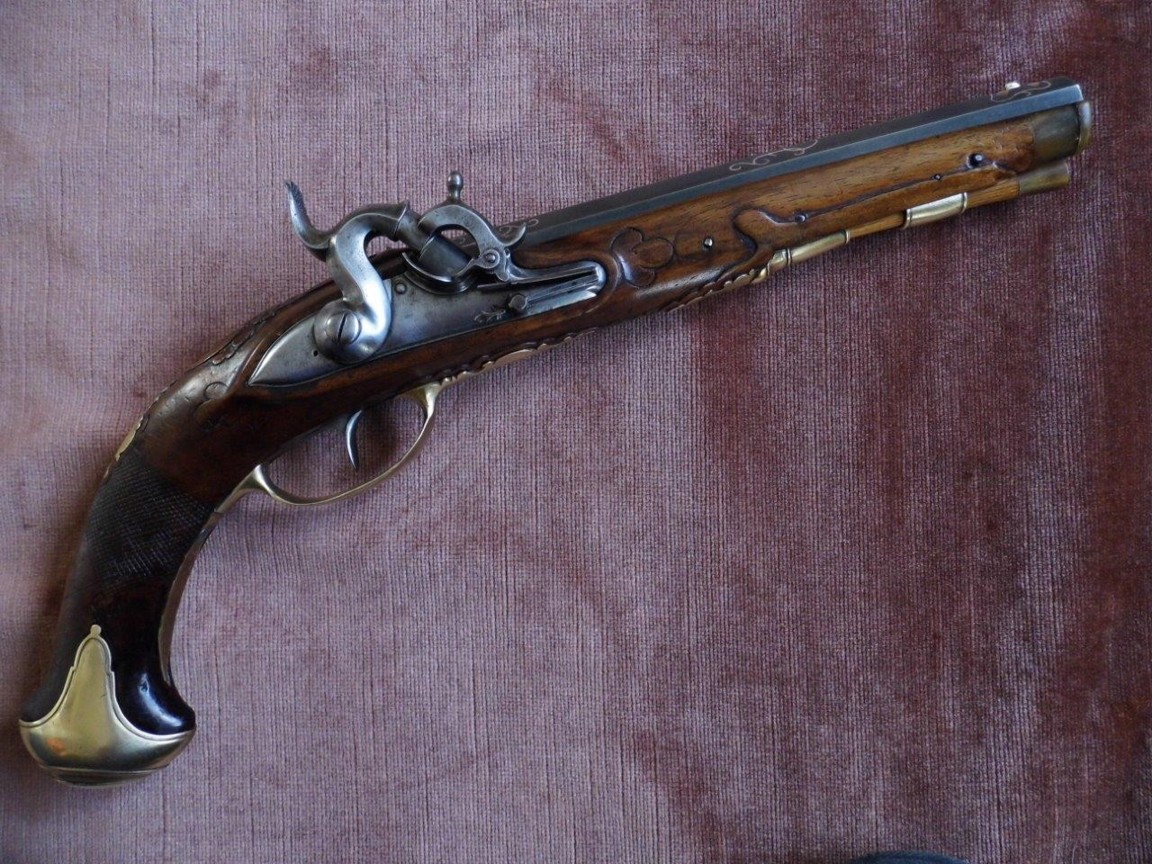
This is a
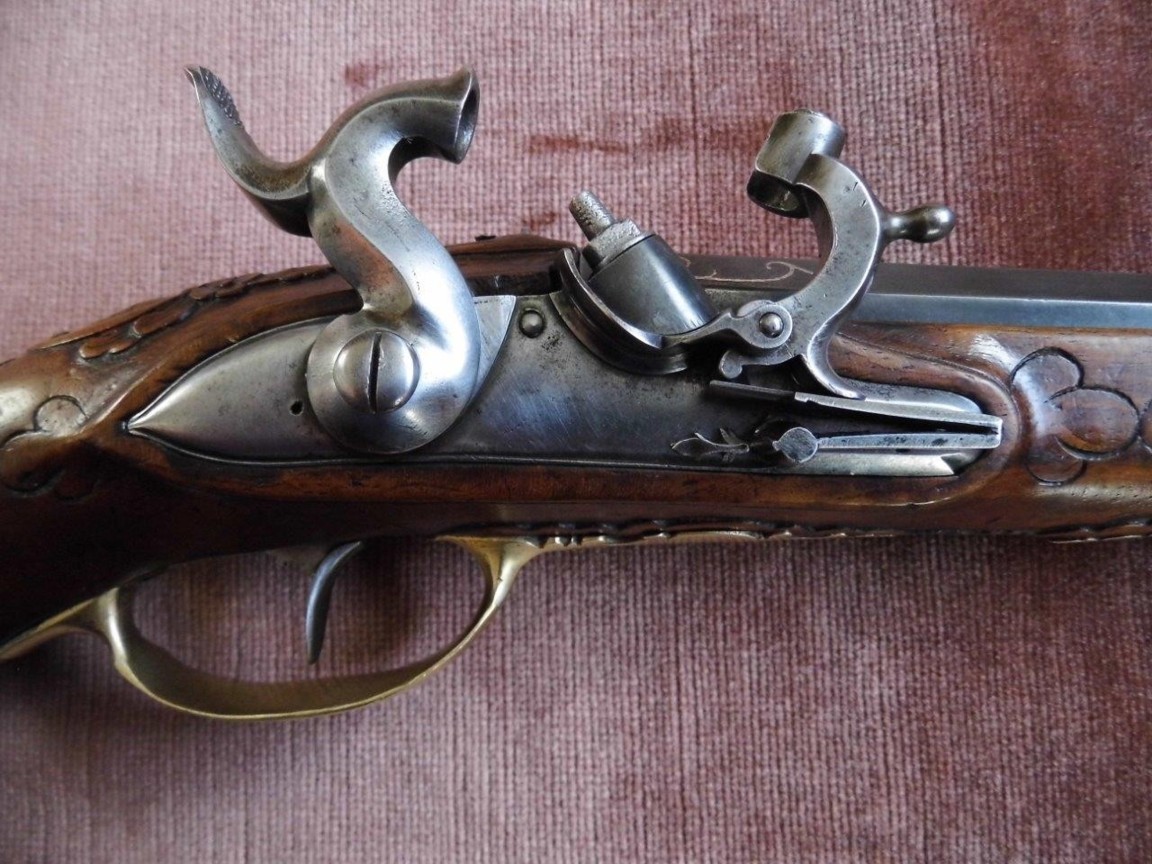
fine flintlock pistol that has been converted to a percussion system. The owner
of the weapon provides a very detailed description, the essential points of
which are summarized below:
“Here is
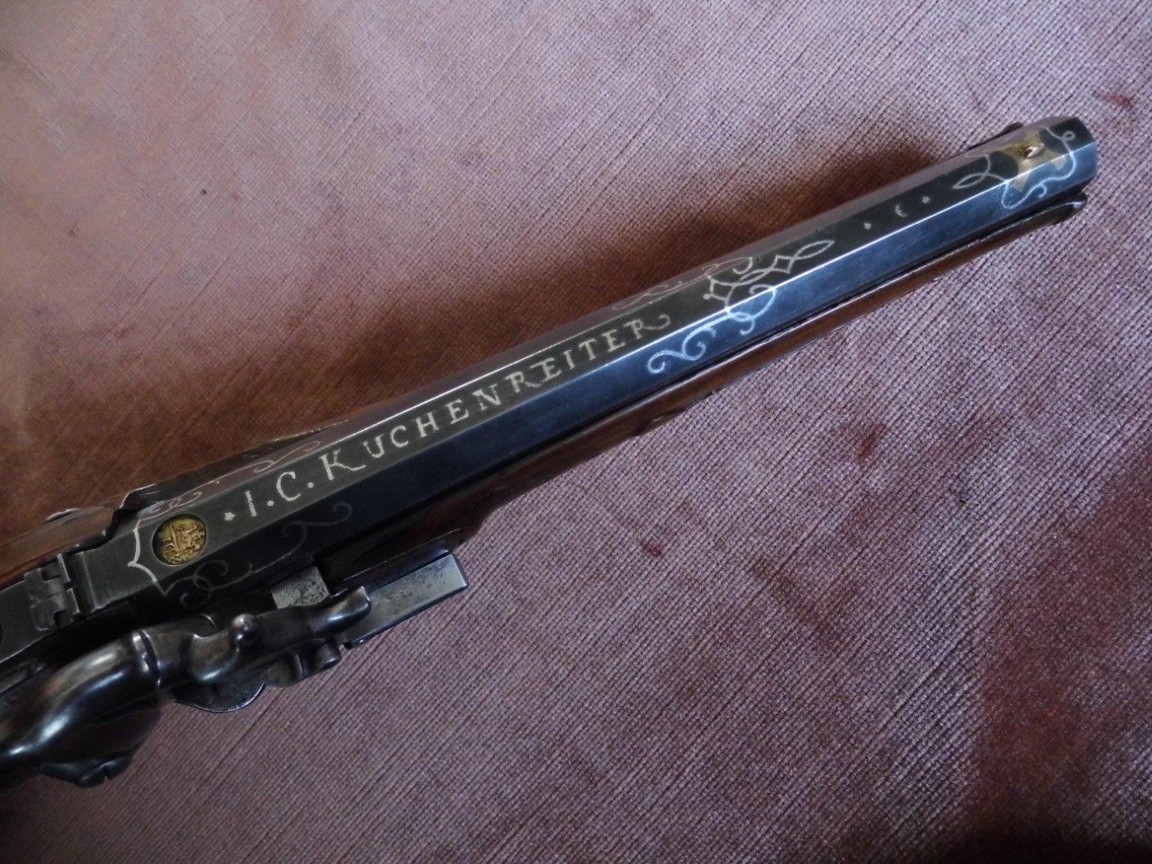
a pistol by Iohann Christoph Kuchenreiter II (1755–1818).
First, I
should note that there are two spellings for this family name: ‘Kuchenreuter’
and ‘Kuchenreiter’—the latter being the version used here.
The
hallmark for the entire family depicts a horseman, accompanied by various
initials that differ according to the individual family member.” The term
"cavalier" (cavalryman) is translated as "Reiter" in German, which may offer a
clue.
The piece
measures 35 cm, has a 13 mm bore with "hair" rifling, and features a rear sight
with a folding leaf. Originally a flintlock, it underwent a very specific
conversion to a percussion system, incorporating a protective cover for the
nipple (a feature also found on the Model 1828 cavalry pistol and its
successors).
Kuchenreuter (or Kuchenreiter) is the name of a dynasty of German gunsmiths—an
even more extensive lineage than the "Le Page" family in France. The line
includes Johann Christoph (1670–1743); his sons Johann Jacob, Johann Joseph, and
Johann Andreas (1716–1795); his grandsons Johann Christoph (the second of that
name) and Johann Andreas (the second); as well as other descendants who were
also accomplished gunsmiths (at least 17 are documented), continuing to the
present day. Most of the antique weapons from this family that survive today are
either original flintlocks or have been converted.
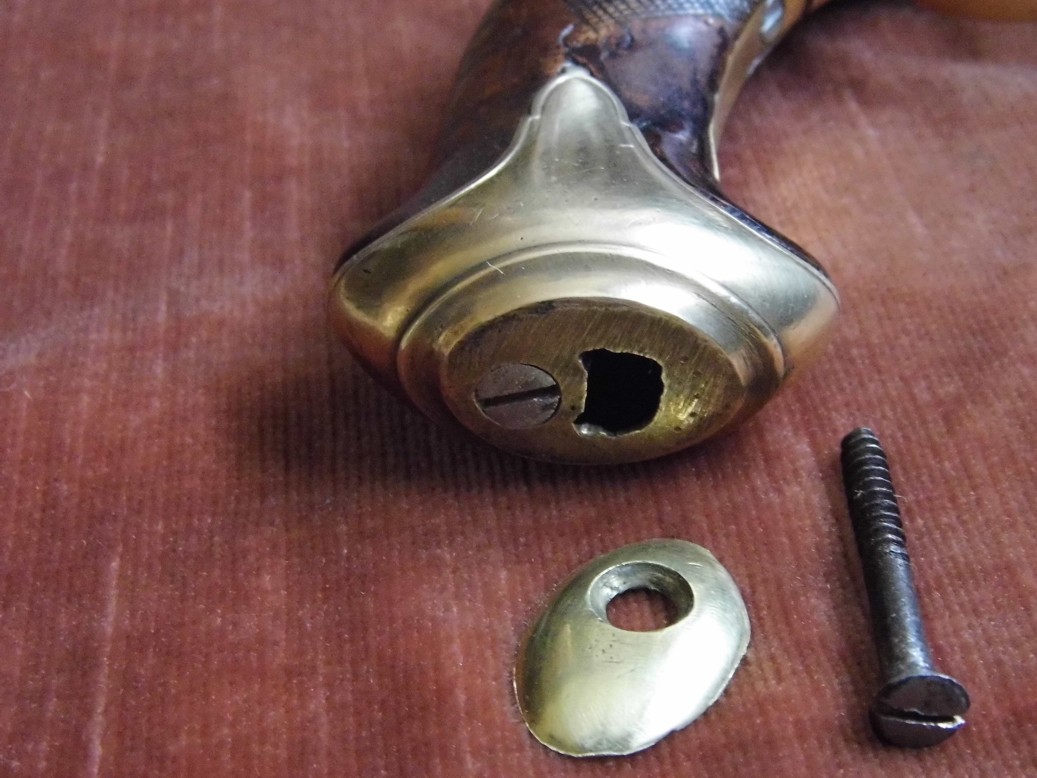
The question raised by the owner of this particular firearm concerns the
two-part butt cap, which reveals an opening inside the grip once unscrewed.
Several hypotheses can be considered:
1.
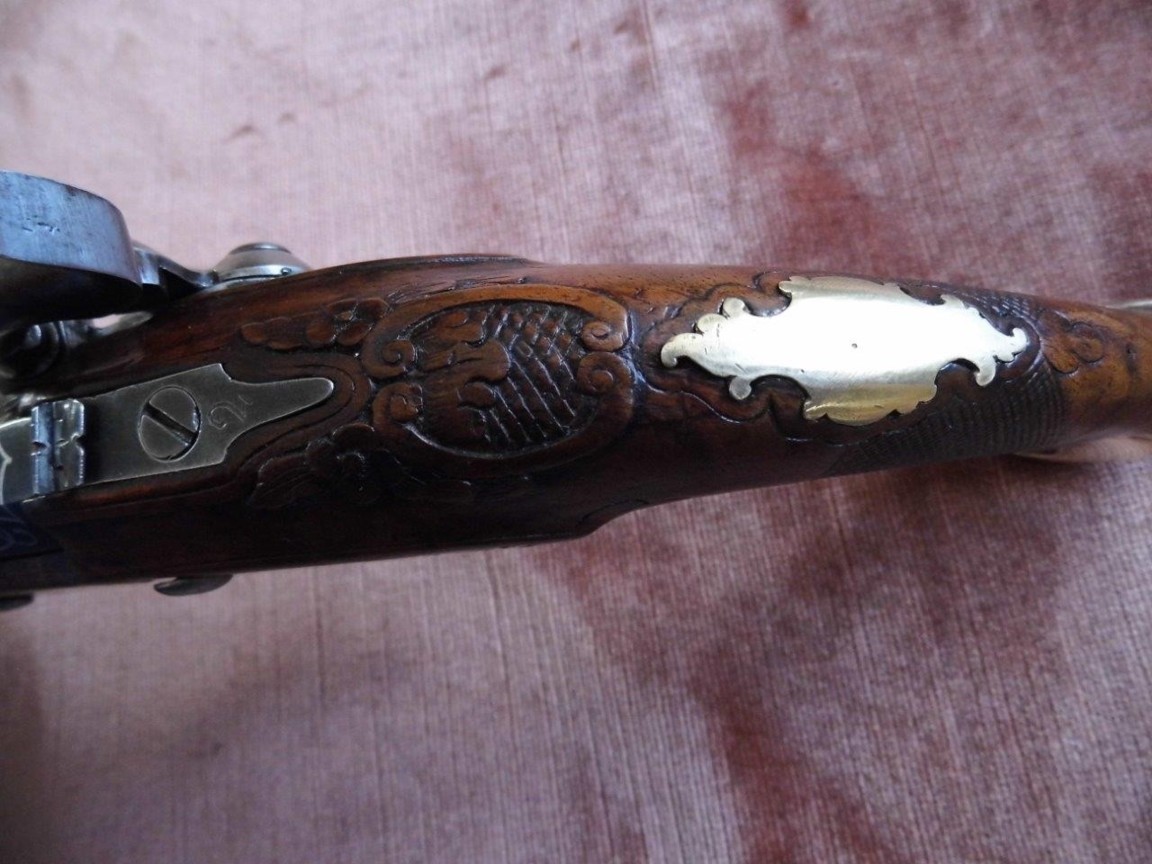
The possibility of attaching a detachable
shoulder stock. This was a common feature among Kuchenreuter firearms; however,
the attachment point was typically located where the thumb plate (escutcheon) is
found. This seems highly unlikely, as such a mounting arrangement would have
lacked the necessary structural integrity.
2.
The creation of a compartment for percussion
caps—required for firing the pistol following its conversion to a percussion
system. This is an intriguing theory, though it would need to be verified by
examining the cavity to determine whether its dimensions are sufficient to store
a number of caps. primers.
3.
Is it possible that another accessory (such as
a removable pommel ring) could be attached, or perhaps a hiding place for a
small object or document?
As it
stands, there is no way to be certain; to clarify the matter, the pommel would
need to be completely disassembled.
Chris, HPH