Jean Alexandre François Le Mat
Here is
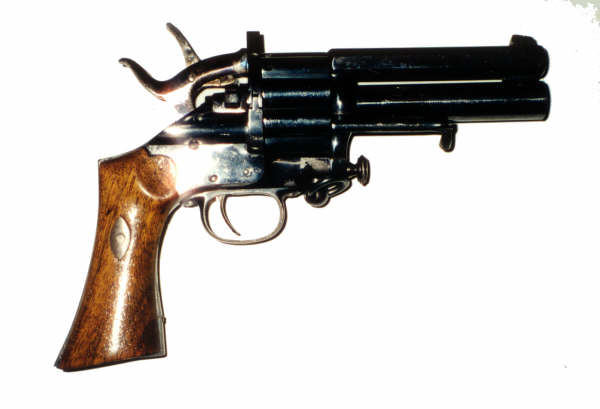
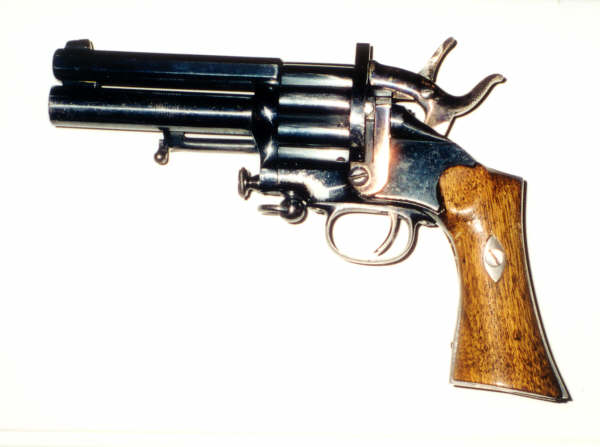
an example of a legendary and celebrated revolver, the brainchild of Colonel Le
Mat. This weapon, in its various versions, is known for having equipped
Confederate officers during the American Civil War. Imposing and massive, the Le
Mat revolver nevertheless possesses a certain elegance, even charm, which has
earned it an international reputation among enthusiasts. Its distinctive feature
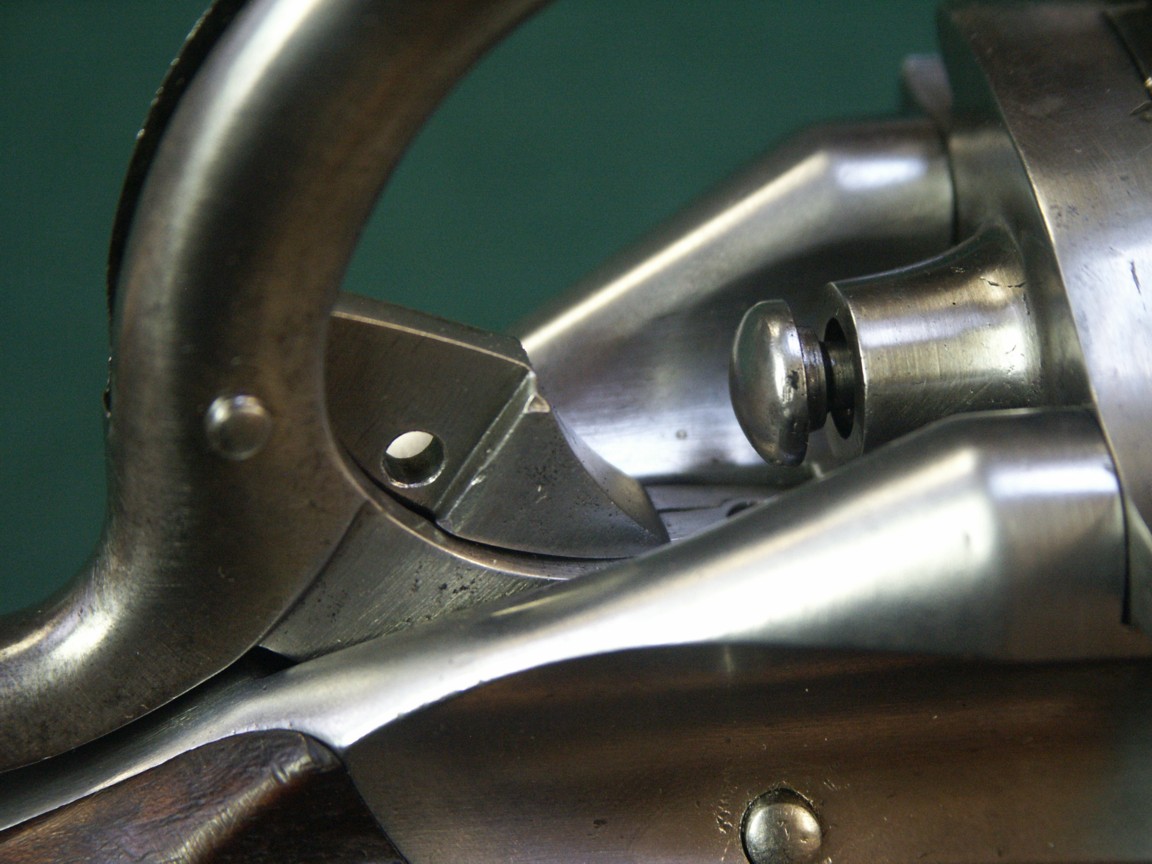
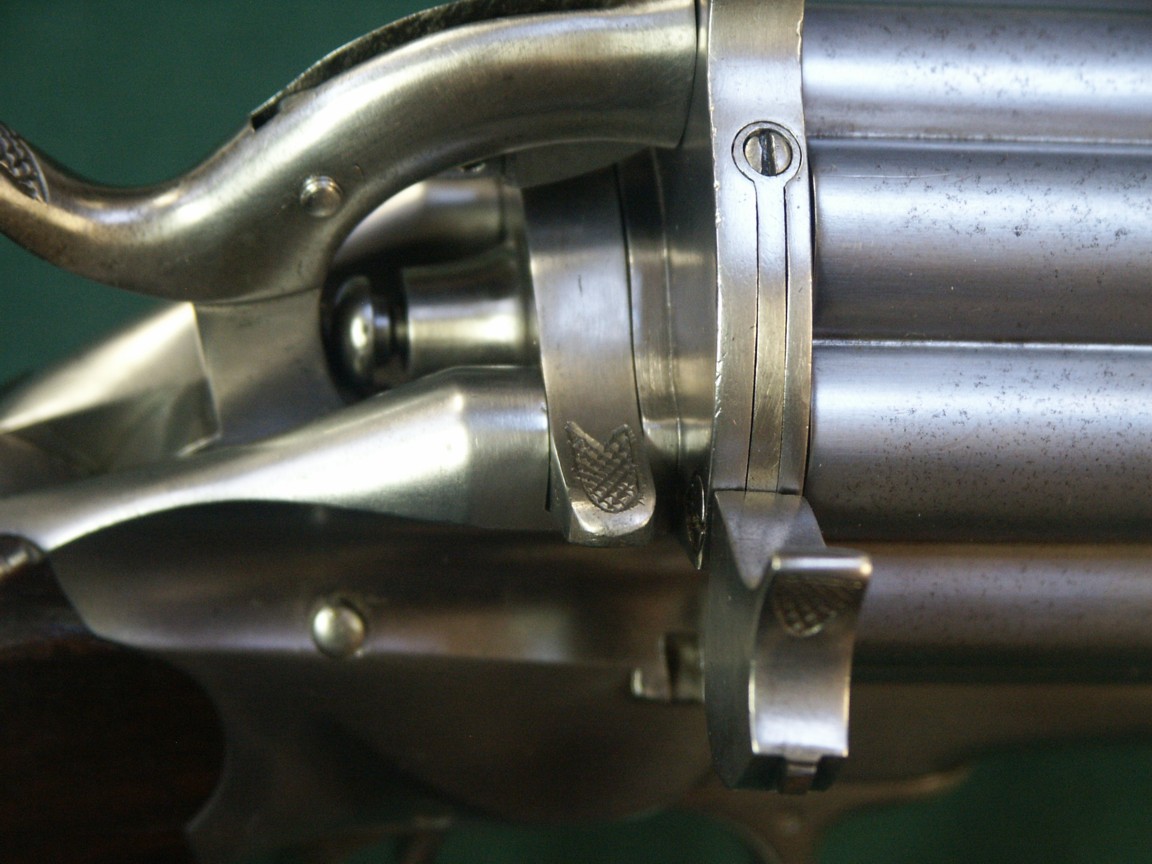
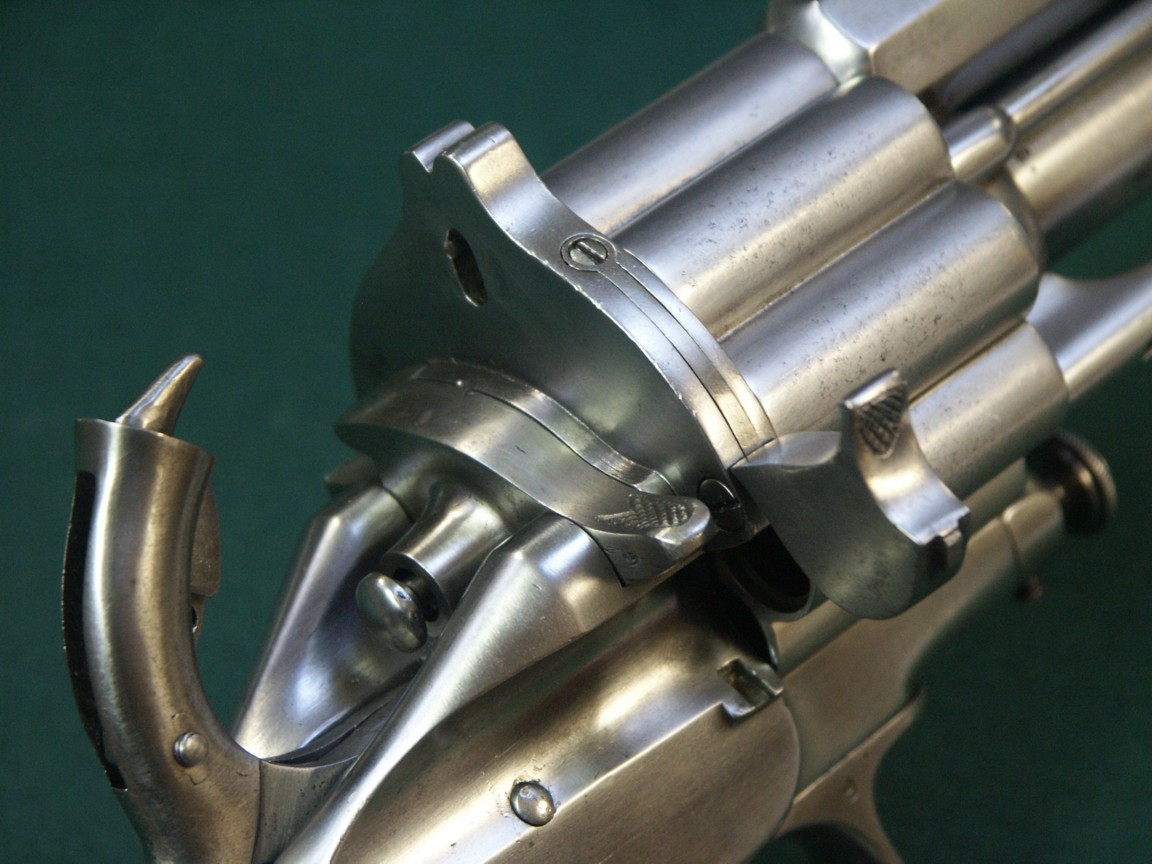
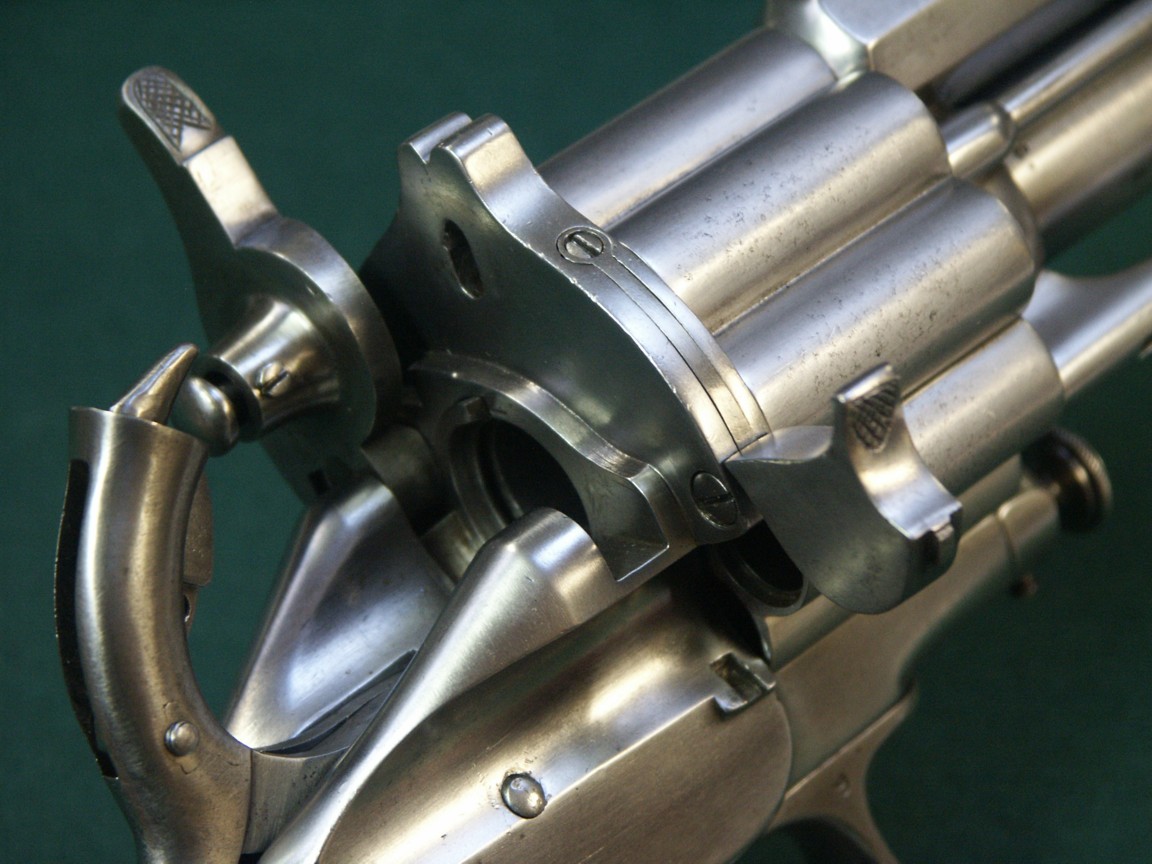
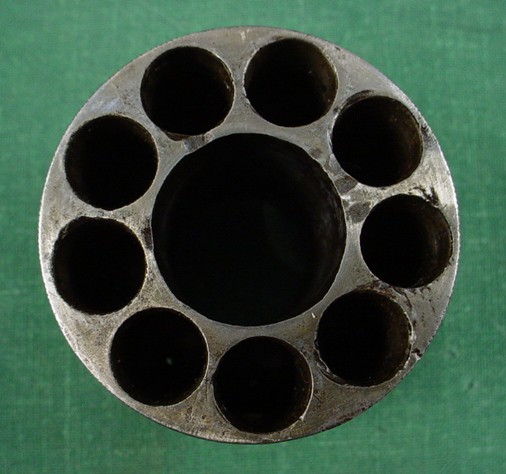
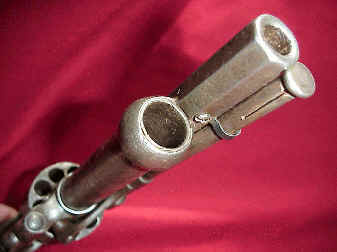
is its two barrels: one for the nine rounds that fill the outer ring of the
cylinder, and the other, central barrel, which also serves as the cylinder's
axis, for a load of buckshot (or gravel or scrap metal). It can only be
muzzle-loaded, just like the cylinder chambers (which were percussion-fired at
the time).
Another
problem with the early production models was the caliber, which did not
correspond to the .36 and .44 calibers used by the military. Users therefore had
to cast their own bullets. Later, Alexandre Le Mat (aided by the flamboyant
Confederate colonel Pierre Gustave Toutant Beauregard) remedied this problem and
reduced the large 18-caliber central gun to the more suitable 28-caliber. The
genesis, history, and variations of the Le Mat revolver are fully explained on
the website by the group's expert on American firearms, and it seems unnecessary
to paraphrase the exhaustive studies he has published on the subject. Readers
are invited to visit:
Other
models and variations are also presented on the website; see:
https://www.littlegun.info/arme%20francaise/artisans%20k%20l/a%20lemat%20gb.htm
For its
rich history, its rarity, and its, shall we say, respectable, not to say
formidable, appearance, the Le Mat revolver has become a particularly desirable
item on the collectors' market.
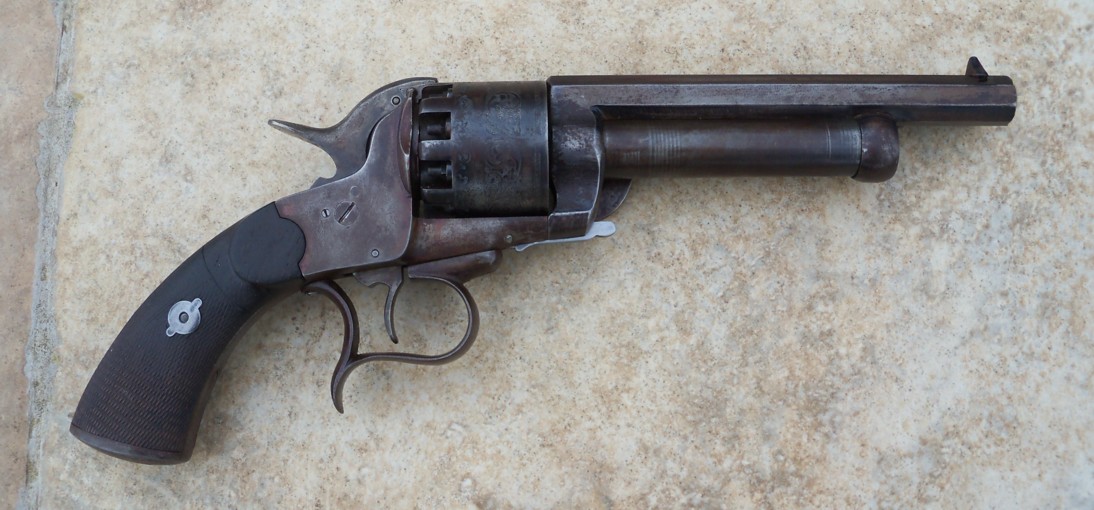
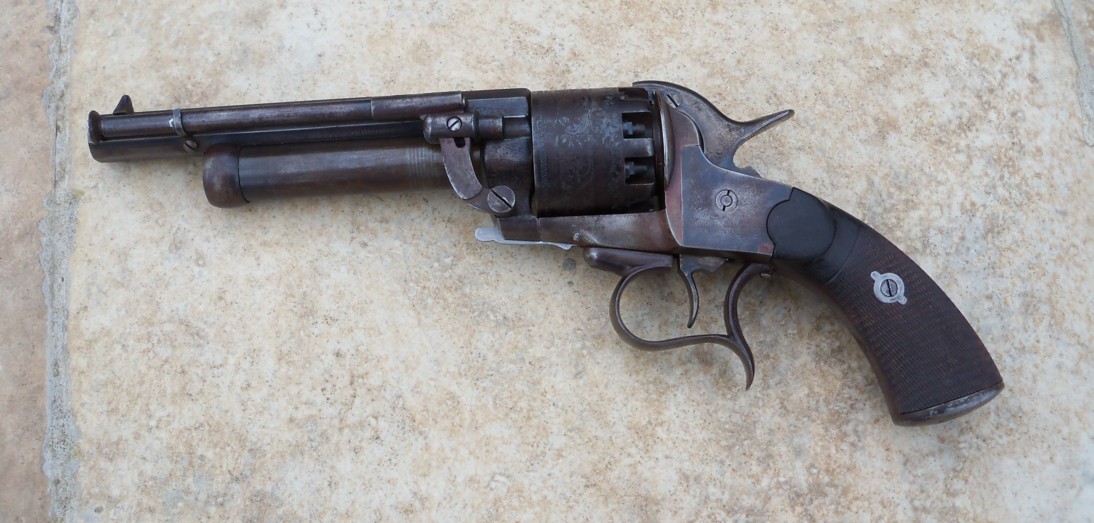
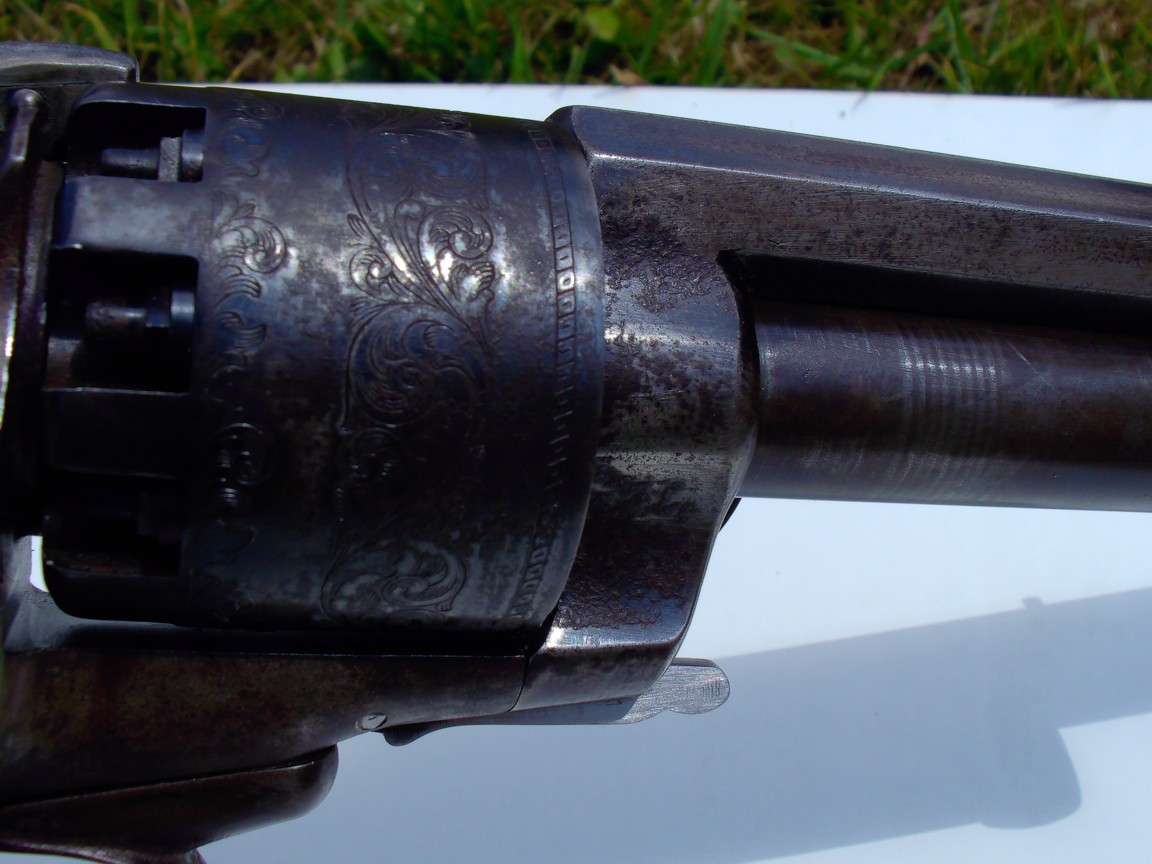
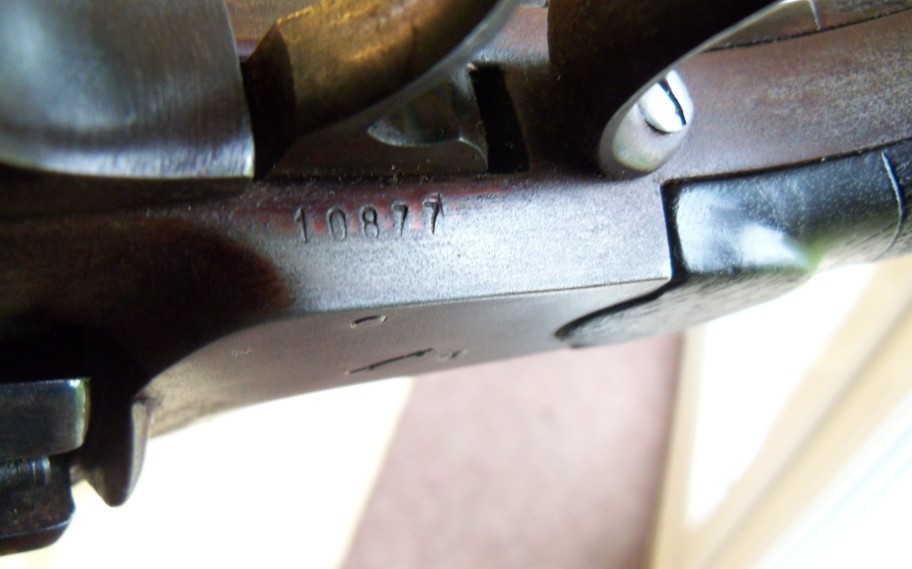
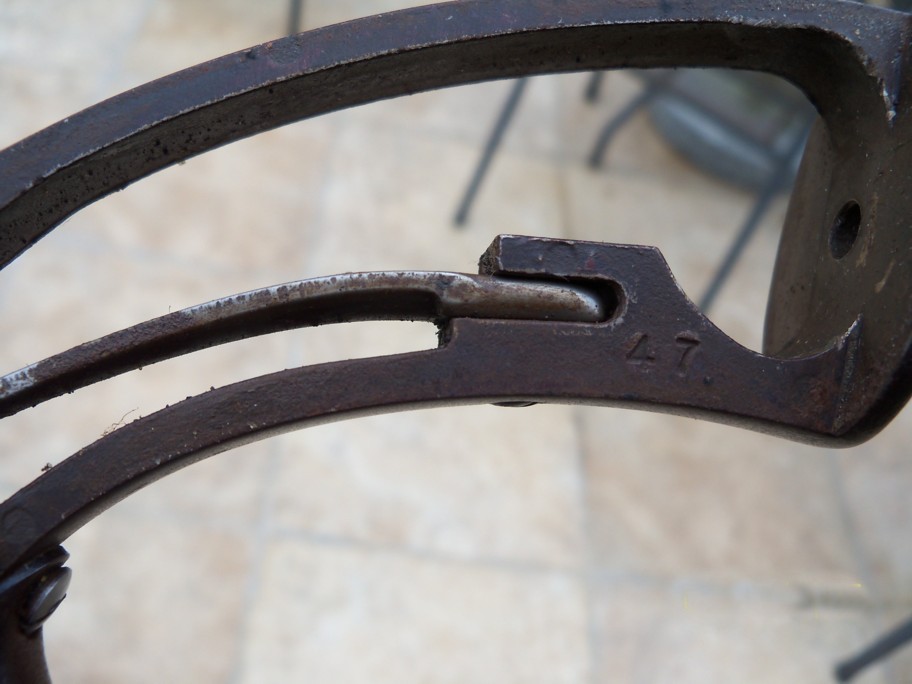
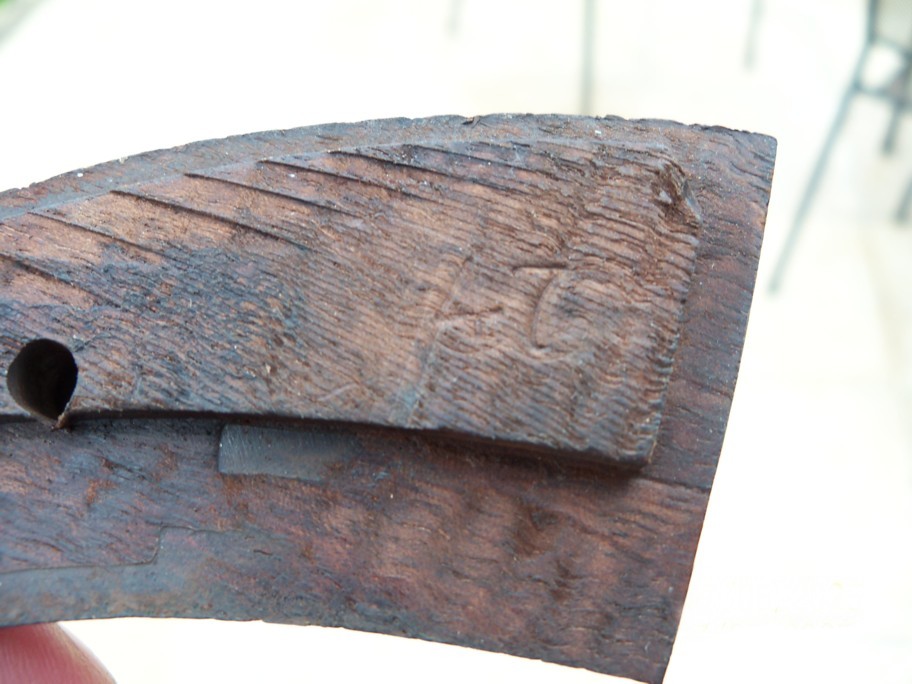
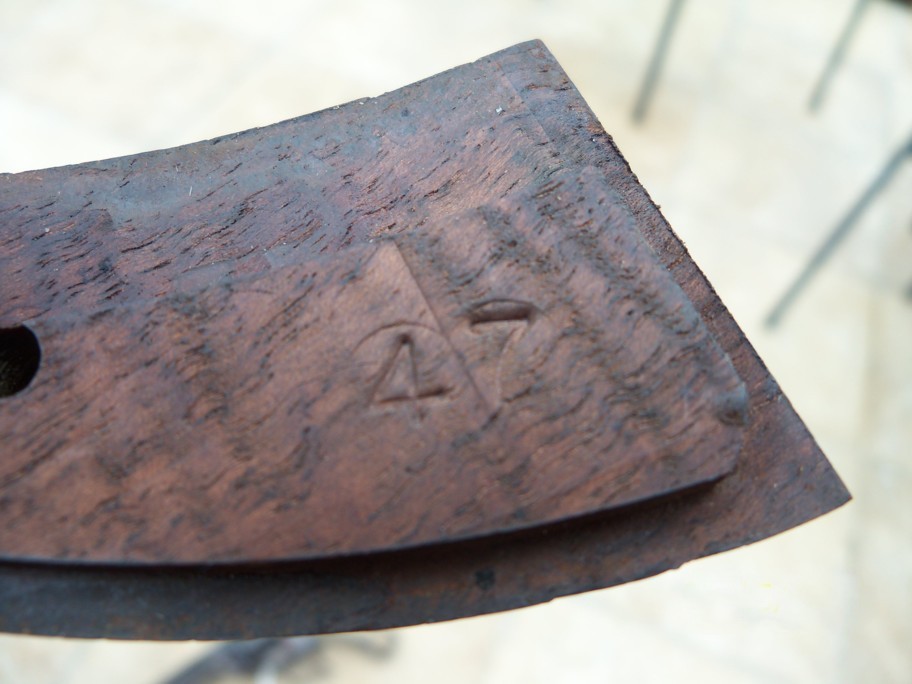
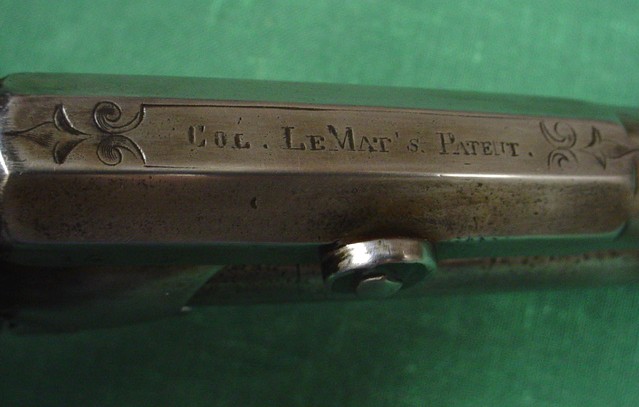
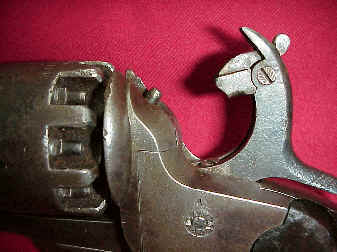
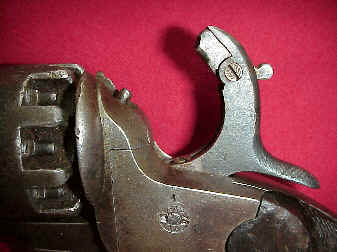
This percussion revolver is decorated with engravings
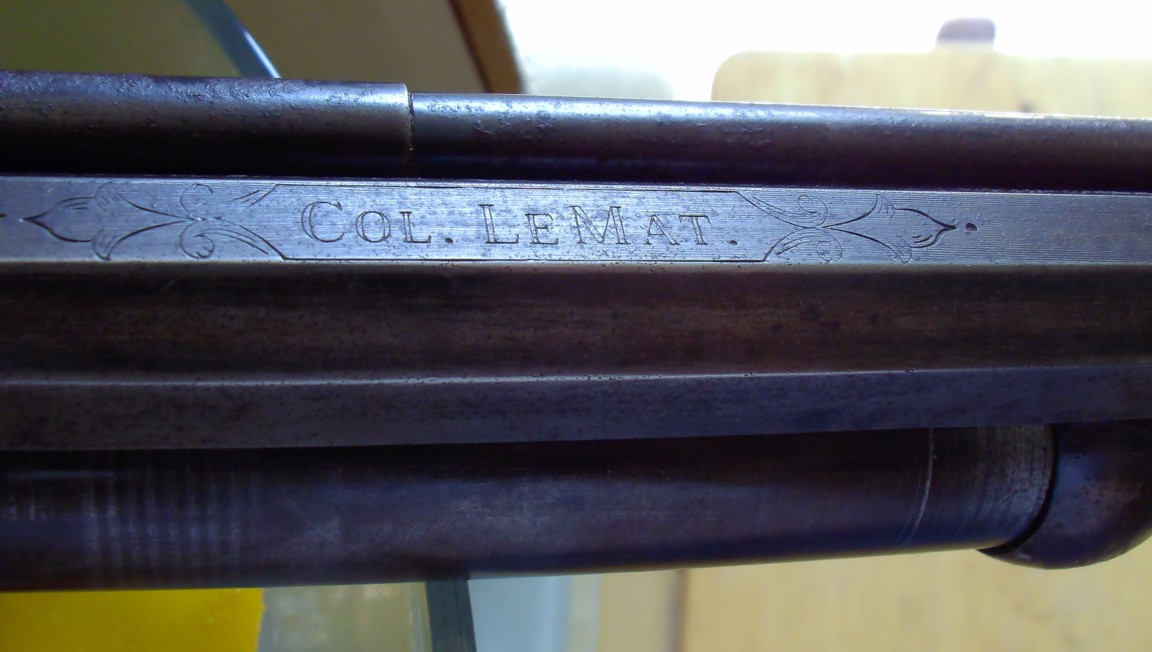
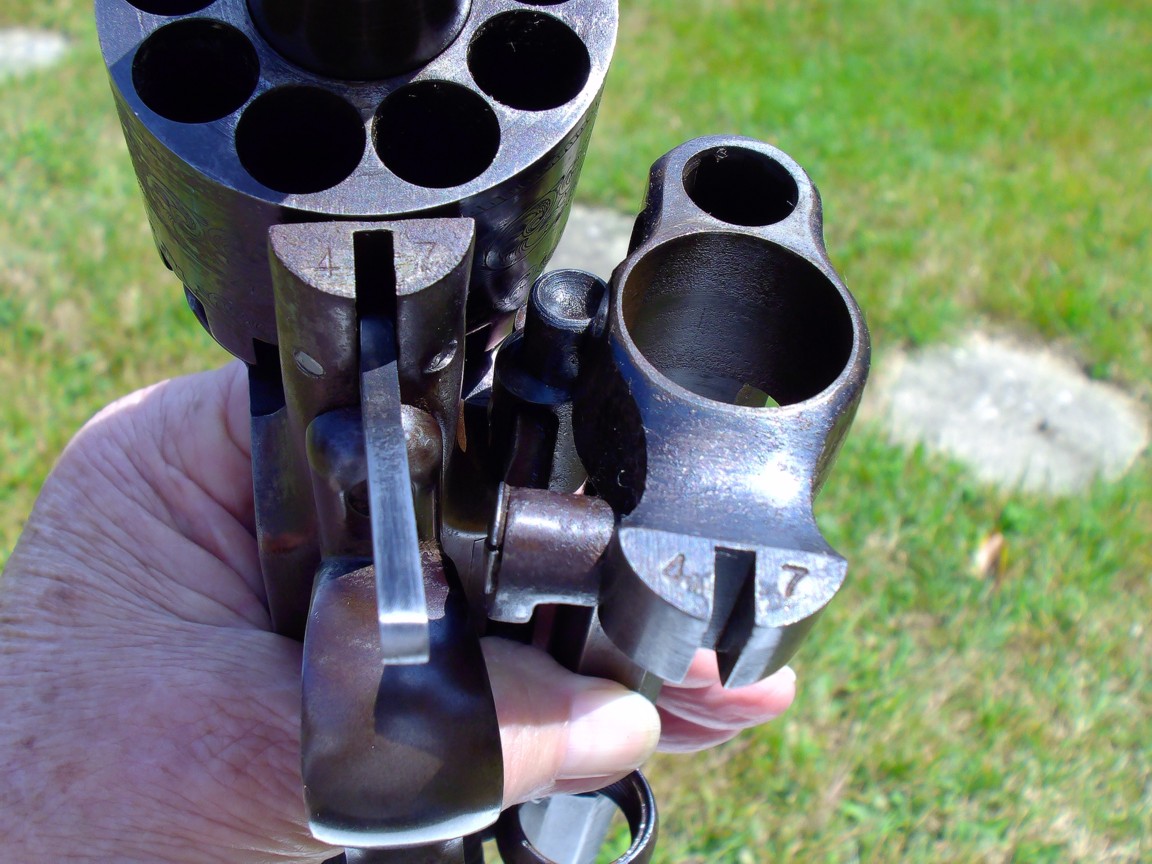
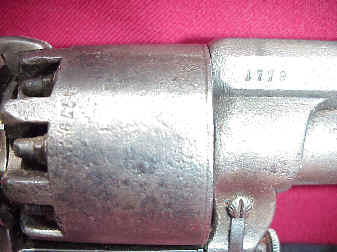
on the cylinder (floral motifs). According to the submitted photos, it only
displays serial and assembly numbers: 47 on all parts and 10877 on the frame, as
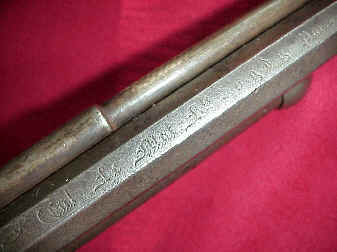
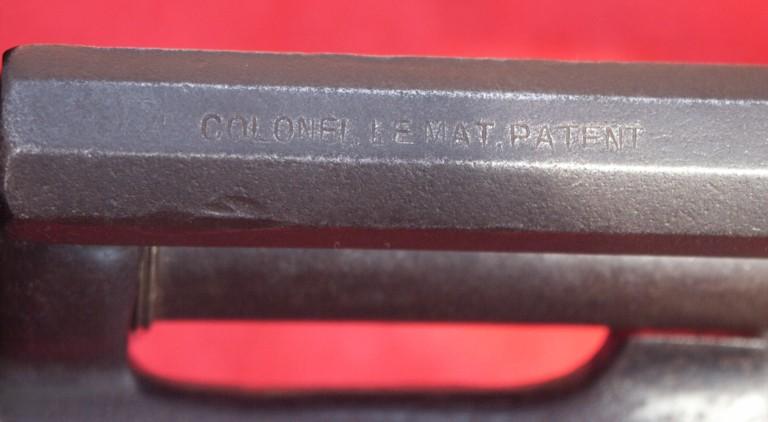
well as the inscription "Col. LeMat." on the barrel. Lacking further
information, it is impossible to determine the identity of its manufacturer or
its exact production date. It should be noted, however, that an identical
example bearing the same engraving on the barrel is featured in the study
published on the website. The analysis reads:
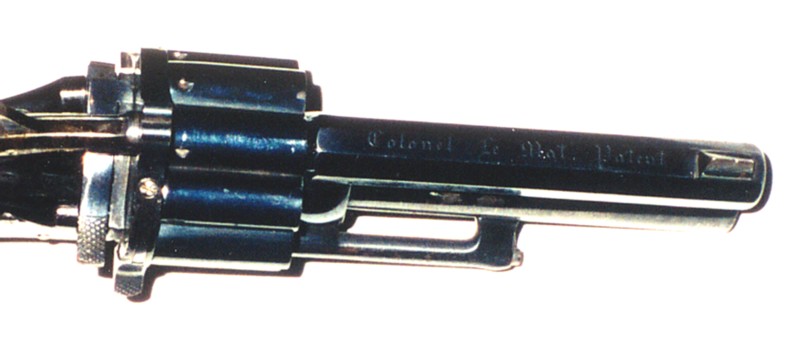
"This weapon is signed 'Col Le Mat' (without the letters S.G.D.G) in a banner on
the barrel, in the same style as other markings from French production… The
serial number is 687. Like the owner, I believe the weapon is part of the batch
manufactured in France." The absence of the letters S.G.D.G. could suggest that
it was manufactured after Le Mat obtained the final patent documents, rendering
these four letters superfluous. Furthermore, the serial number fits perfectly
within a batch of approximately 2,500 pieces."
Fun
Facts: The Le Mat Revolver in Popular Culture:
Thanks to
its "virile" and muscular appearance, this revolver features in several films,
television series, and video games. Notably, it appears in the excellent science
fiction series "Westworld" by Jonathan Nolan and Lisa Joy, where it accompanies
the remarkable actor Ed Harris throughout the episodes. As a reminder, this
futuristic series is an homage to the eponymous film in which Yul Brynner
captivated audiences as an android with little regard for humans (director:
Michael Crichton, 1973).
To meet
the demand from enthusiasts, given the rarity and price of authentic models, the
Italian firm Pietta produced a highly sought-after black powder replica, while
the Spanish company Denix offers an inexpensive, inert replica.
Chris, Marcel, HPH
Jean Alexandre François Le Mat
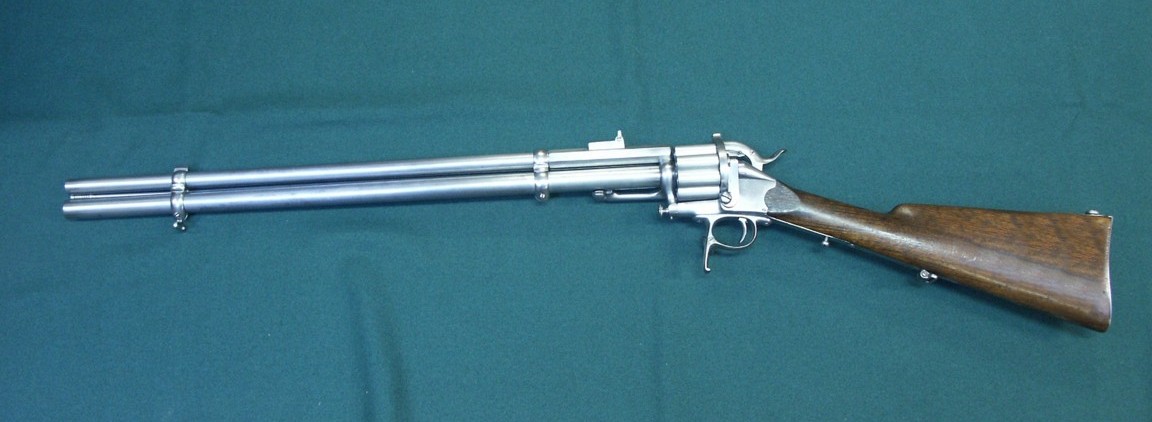
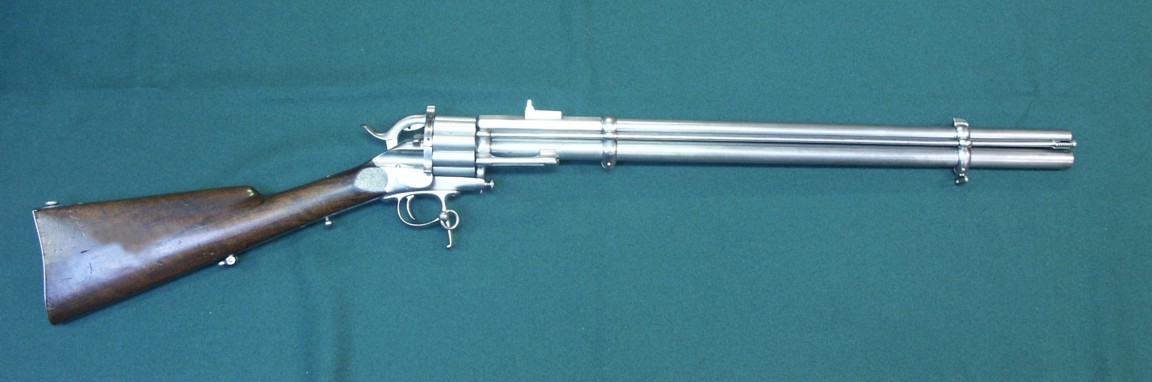
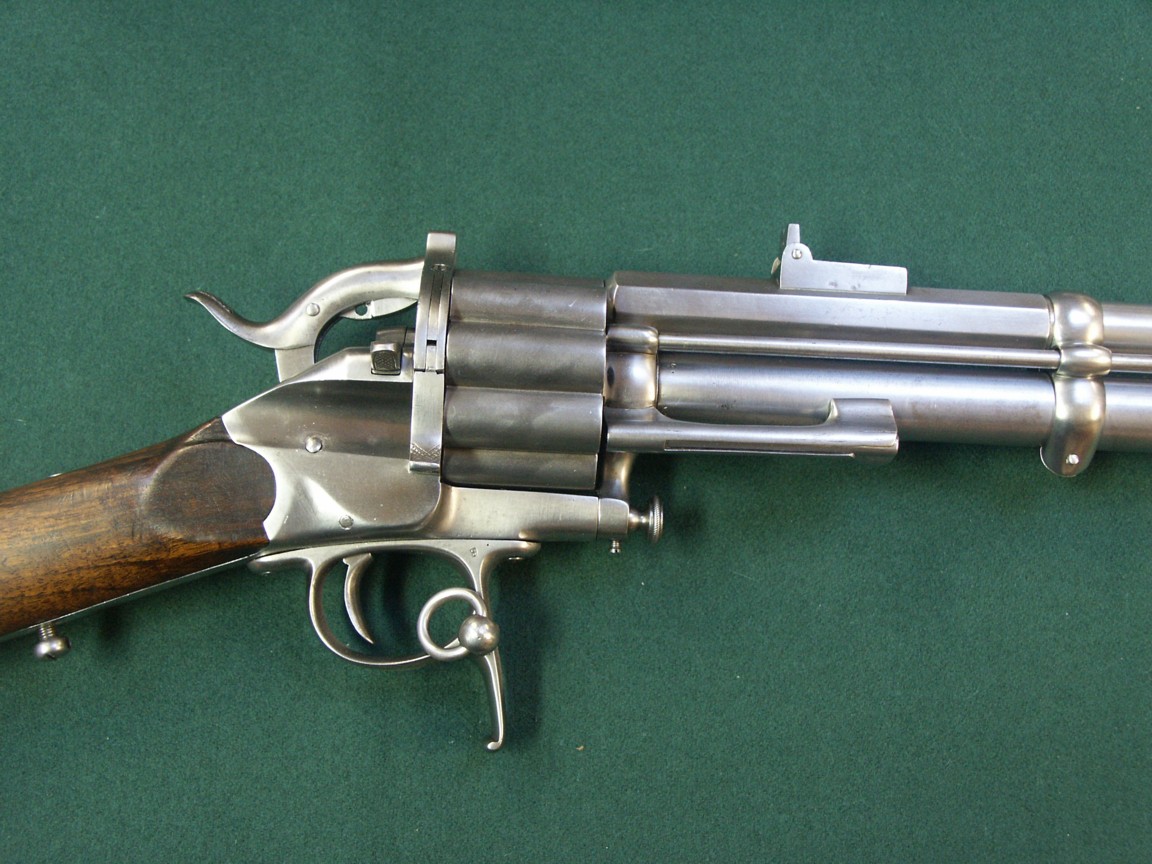
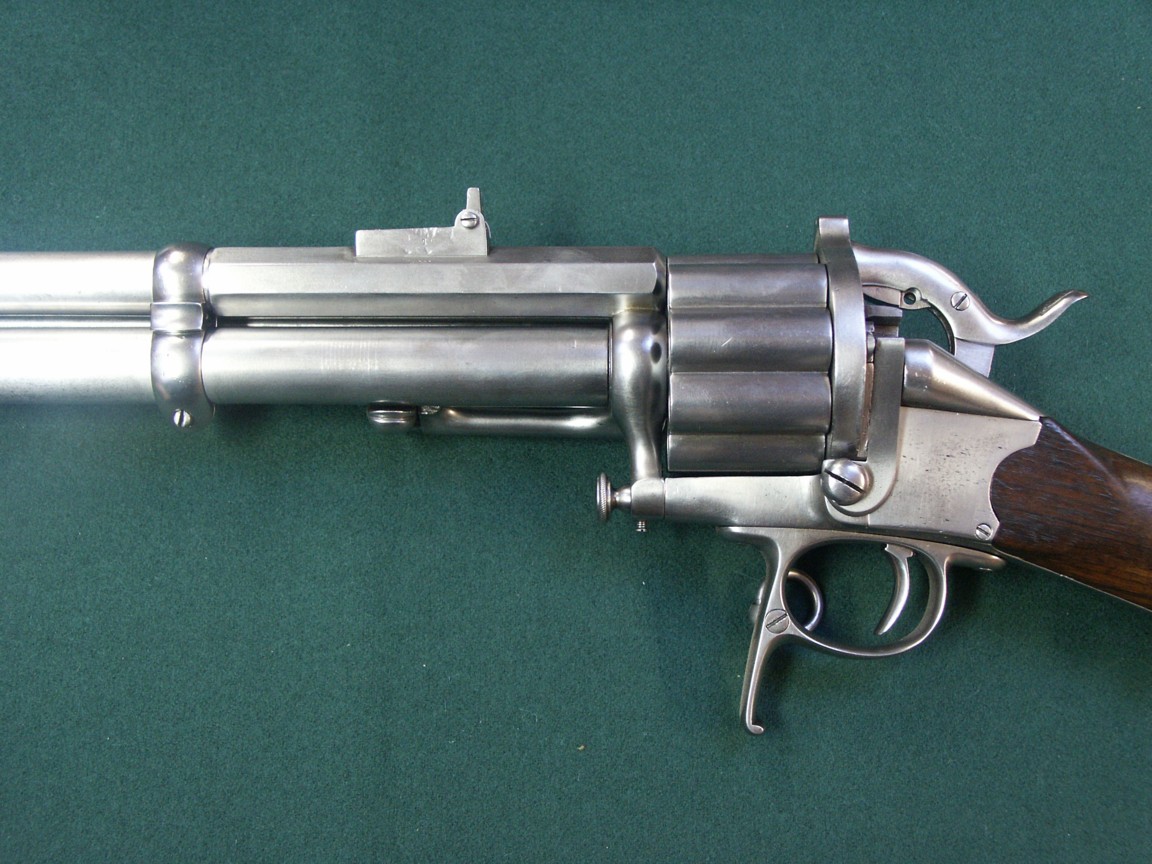
Jean Alexandre François Le Mat
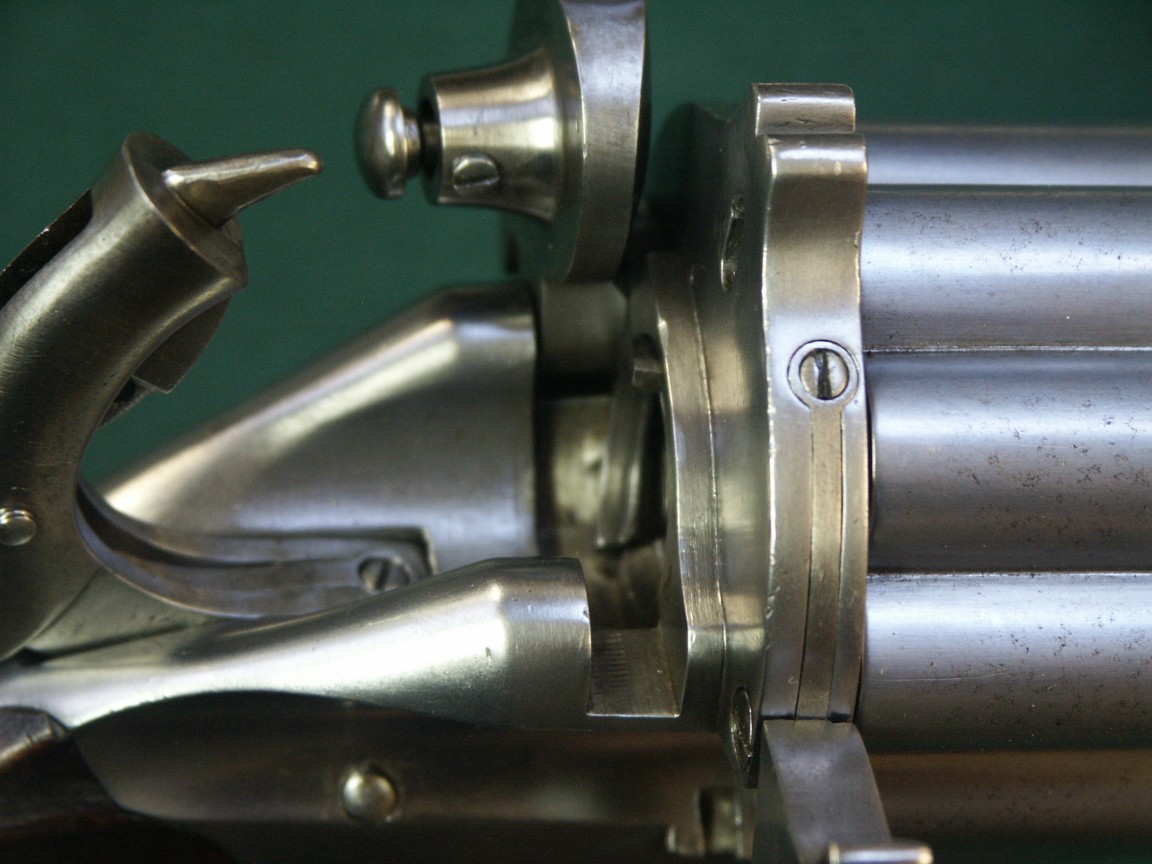
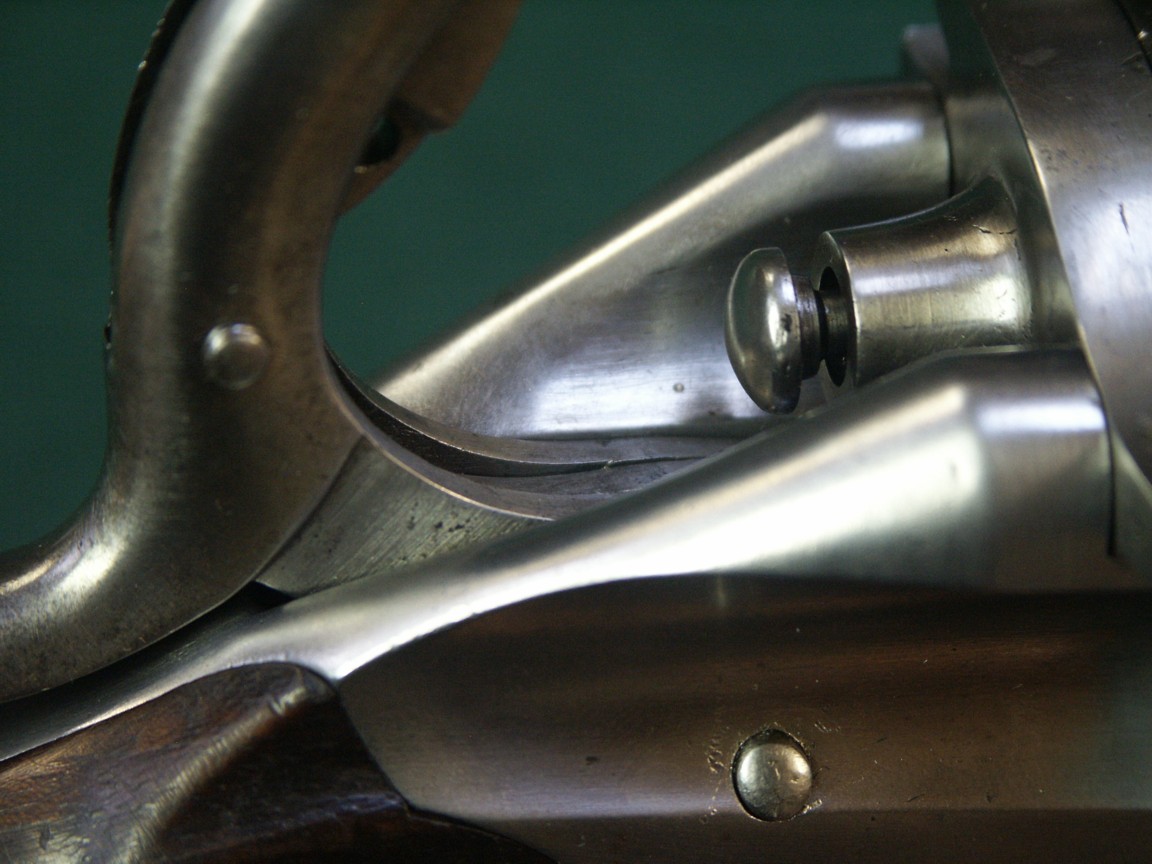
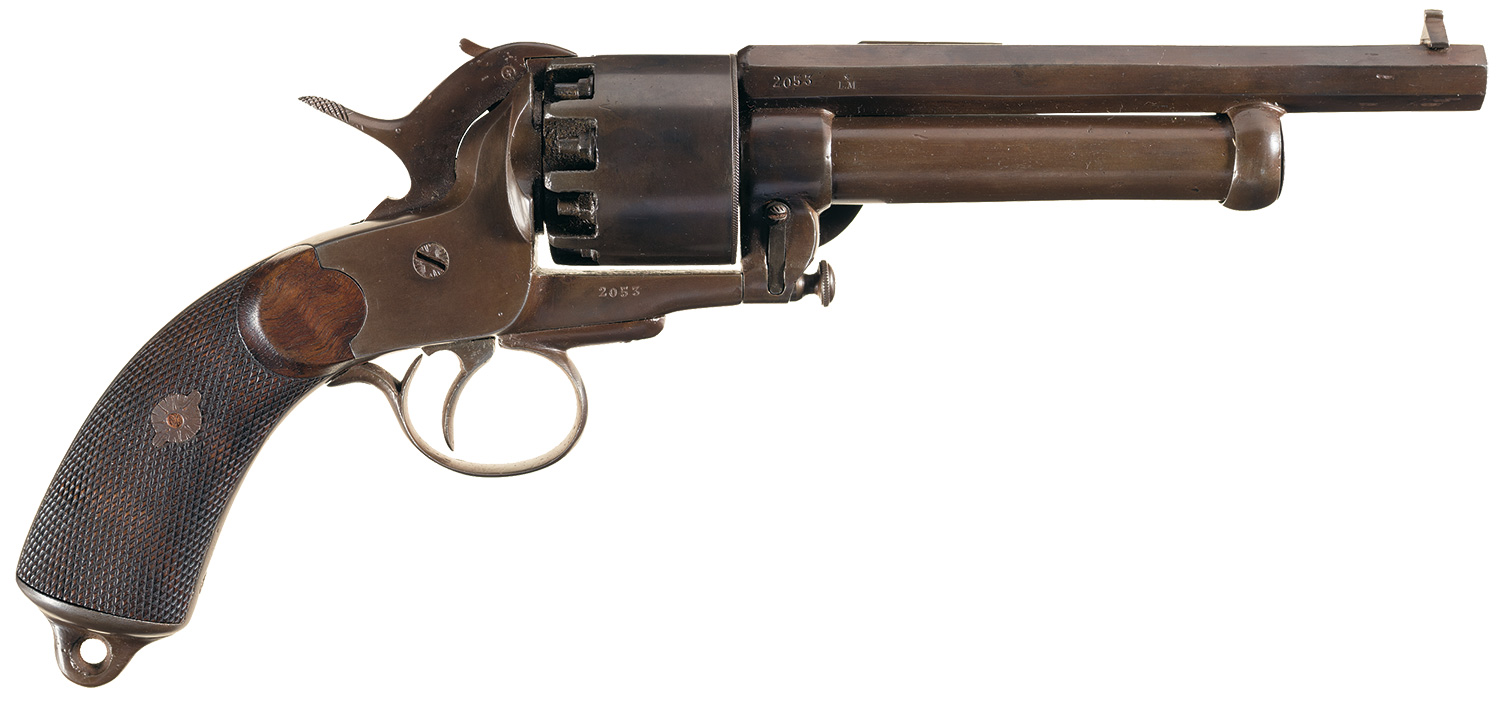
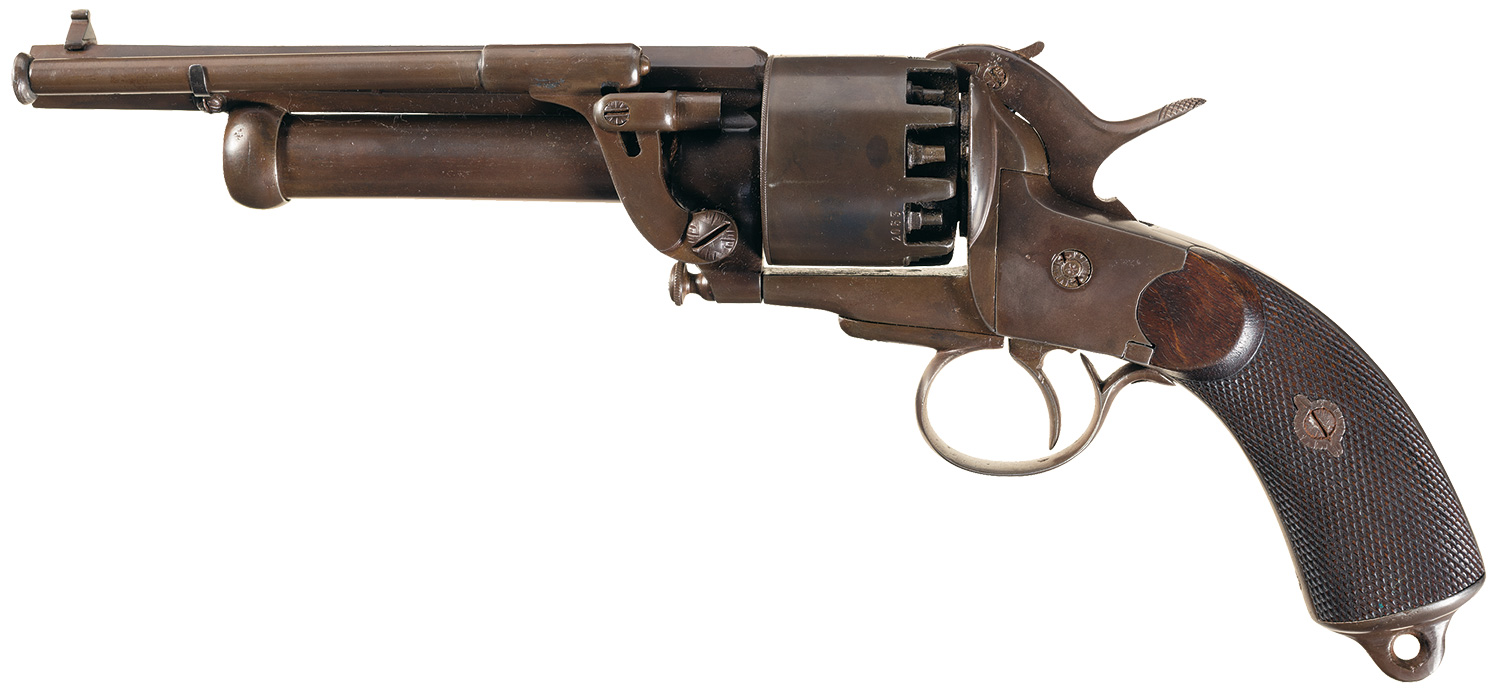
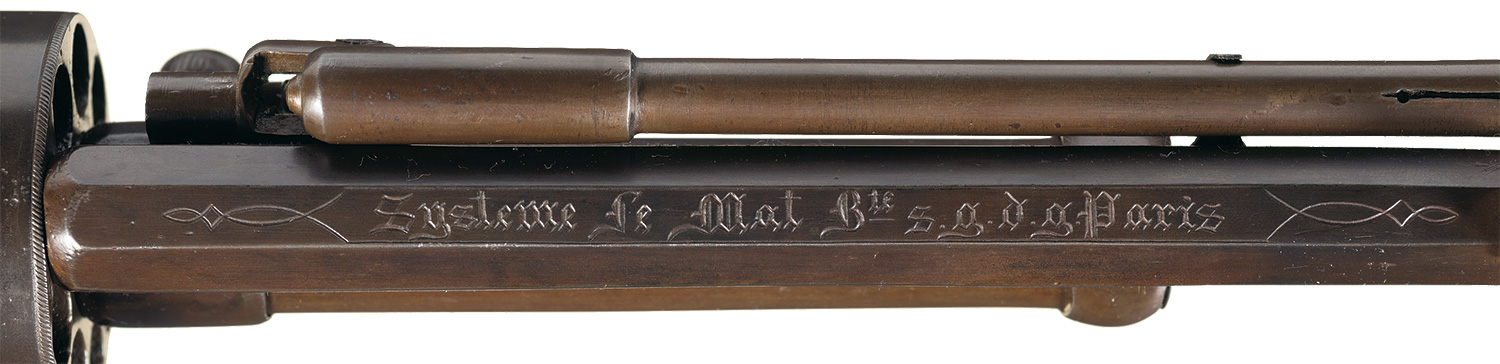
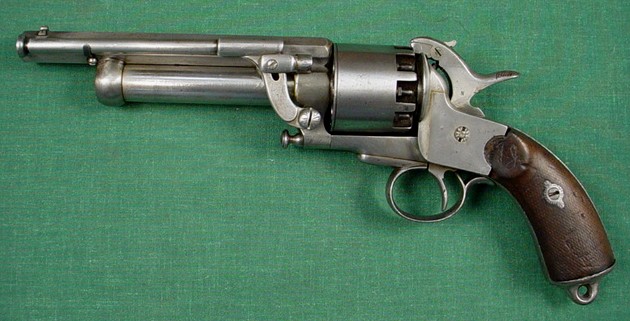
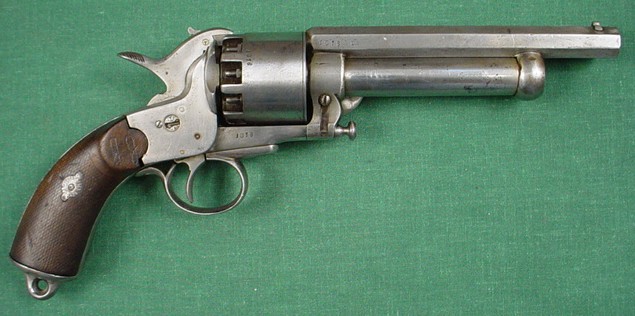
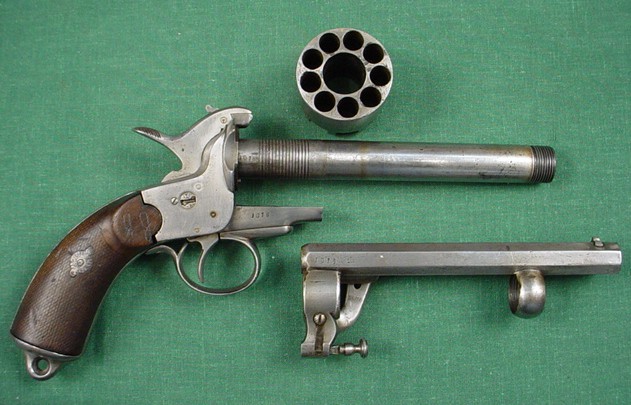
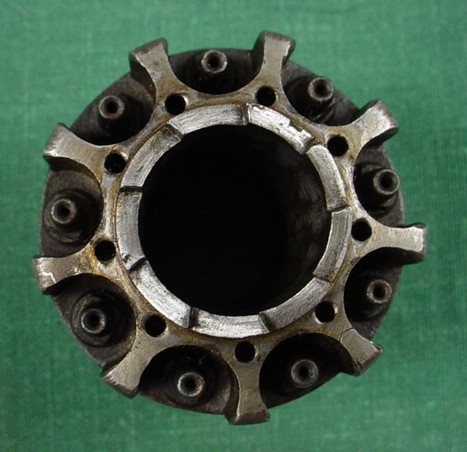
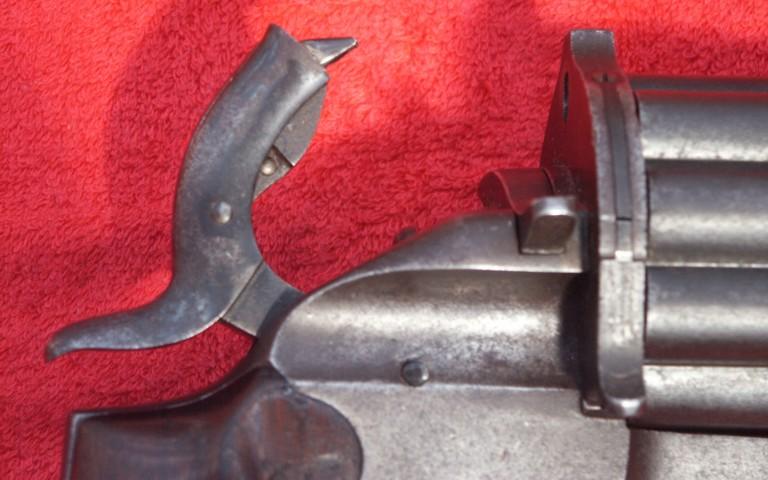
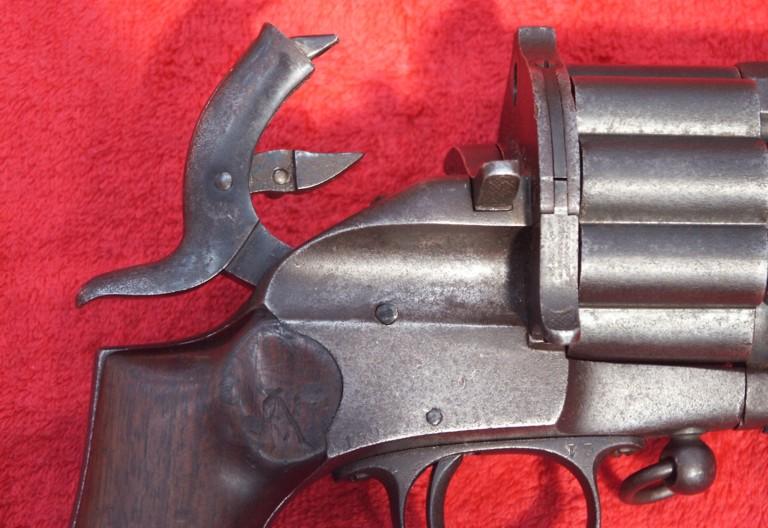
The revolver features LeMat's signature nine-shot barrel with a smoothbore "mitraille" barrel for firing buckshot, a full octagonal barrel with a loading lever on the left side, a two-position hammer, and a fixed lanyard ring in the stock.
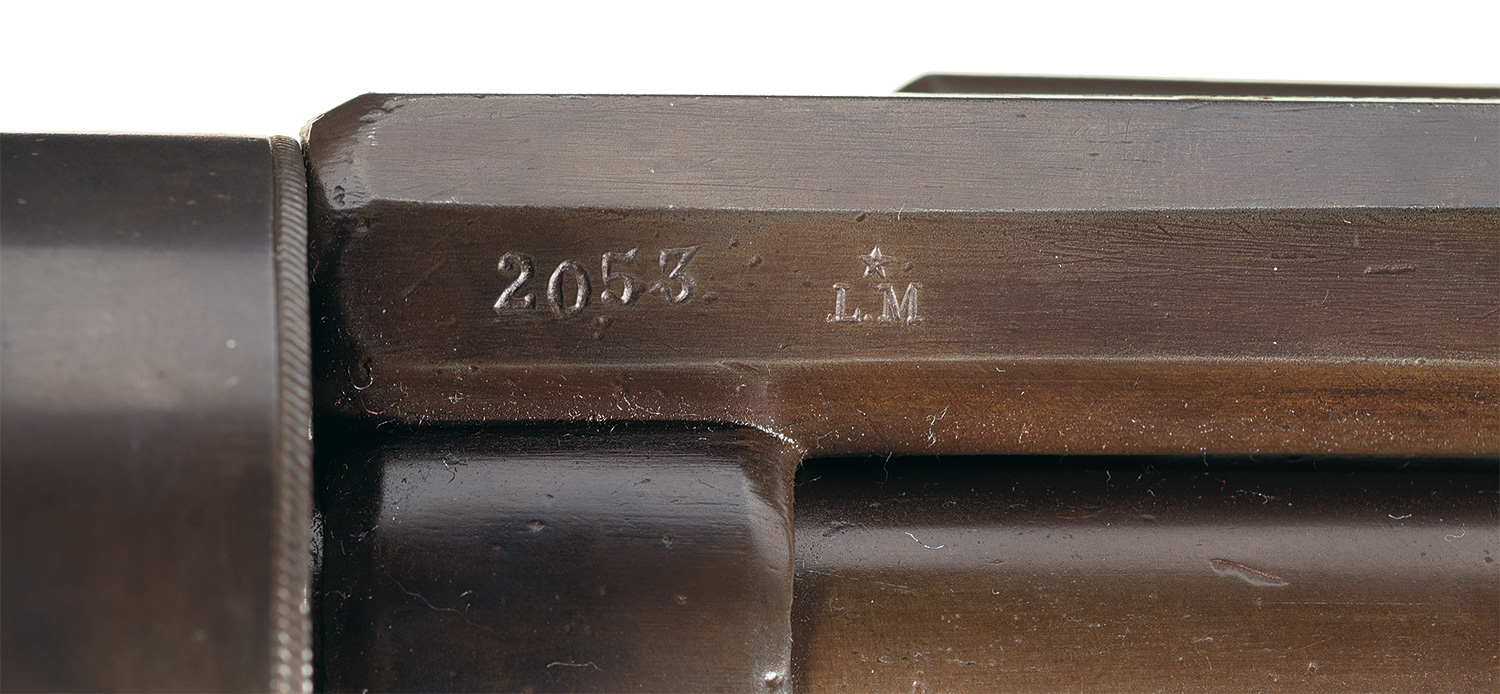
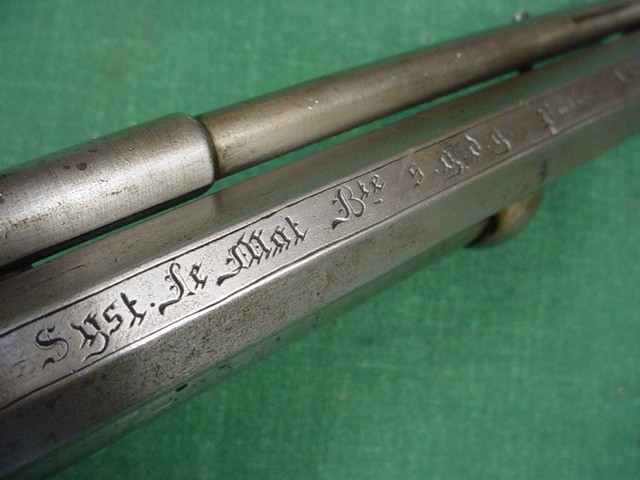
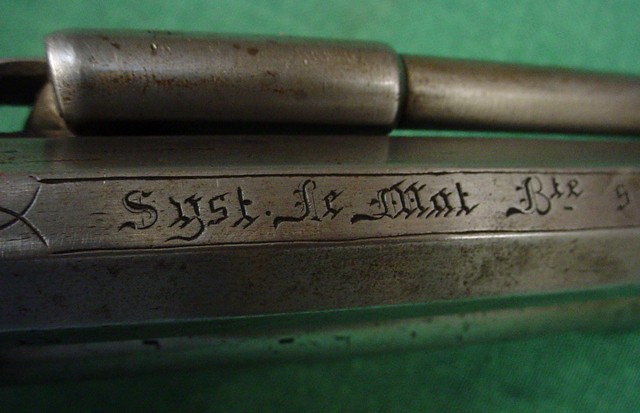
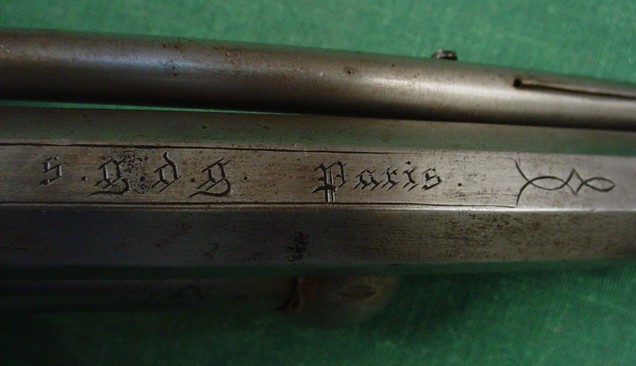
The top plate of the barrel is marked "Système Le Mat Bte s.g.d.g. Paris" flanked by light engraving. The right side of the barrel is stamped with the LeMat mark: a five-pointed star above the letters "LM".
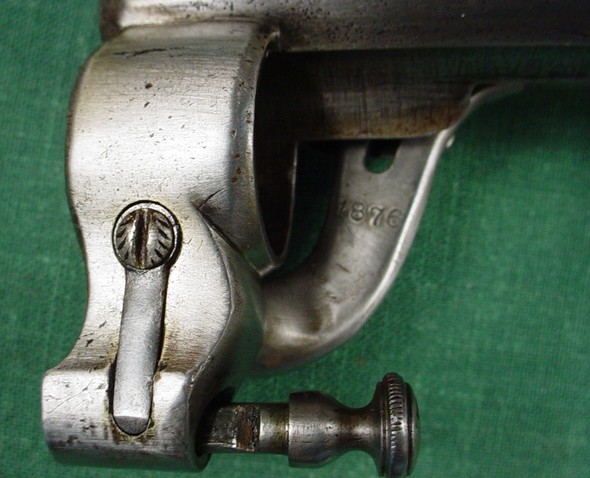
The full serial number is stamped on the right rear plate of the barrel, on the right side of the frame below the cylinder, and on the cylinder.
The LeMat is known to be the preferred personal sidearm of a few high-ranking Confederate officers, Jeb Stuart to name one.
The unusual design, mechanical features and the fact that it was invented by a Southerner make it a desirable addition to any C.S.A. collection.
Jean Alexandre François Le Mat
Dr Jean Alexandre François Le Mat was a Frenchman who lived in New Orleans, Louisiana, since the 1850's. Besides being a doctor, Le Mat was also an inventor; and one of his major inventions, short before the American Civil War broke out, is a revolver that was unique in its kind, and would soon proved to be superior to the majority of its challengers.
On October 21st, 1856, Le Mat was granted patent n° 15925 for his revolver. The patent describes a very particular feature of these revolvers, which is that the axis around which the cylinder revolves, is not a simple axis but an additional barrel. Also, the possibilities for the user to fire at will the normal or the additional barrel.
In 1859, Le Mat associates with Pierre Gustave Toutant Beauregard, who was then a Major in the United States Army, and would later become a well known General in the Confederate Army. Beauregard held 1/4 of the shares in the association.
Their purpose was of course to sell the new revolver to the US Army, and they succeeded in drawing the interest of the War Department, that decided to examine and test the gun.
The tests were found positive, and besides some minor changes to bring in order to make the gun lighter and easier to repair, the Army gave a full favourable advice.
However, the gun was never ordered.
Le Mat and Beauregard turned then towards large producers such as Manhattan Arms Co, Springfield Arms Co, Bacon and others, but all these efforts remained unsuccessful. The associates began the to look for other possibilities outside the USA, applied for patents in Russia, France, Belgium, The United Kingdom, Prussia and Saxony.
On April 10, 1860, Beauregard sold his parts back to Le Mat and left the company, in order to carry on with his military carrer, this time in the Confederate Army. Soon after, Le Mat sold 3/4 of the company to another French doctor, Charles Frederic Girard. On August 12, 1861, Le Mat was the sole firearms manufacturer to have secured a contract with the Confederate Government for the delivery of 5,000 of his revolvers. He also secured a contract with the Confederate Navy. The terms of the latter contract have been lost, but traces of its existence have been found in other texts dated July, 1862.
The question arose among collectors, as to wather the Le Mat revolvers should be considered American rather than European.
Althought the very first patent was granted in the USA, it is however very doubtful that a real production has taken place in that country, apart from the few dozens of gun presented to the Army for testing.
Besides, it is certain that the great majority of these weapons were manufactured in France; thus it is logical to consider those revolvers as a French product. In the same way of thinking, Samuel Colt, who had been granted his very first patent in London in 1835, a year before he applied for his first patent in the USA, started the manufacture in the USA and only about 16 years later in London, for only 6 years. So it would be ridiculous to affirm that the Colt weapons are of British origin.
Le Mat and Girard installed their shop in Paris, 9 impasse de Joinville, where it was directed by a man named Chevereau. It seems that the production system was similar to that in use at Liège, St Etienne and London: several small armsmakers were contracted to produce the different parts of the revolvers that were assembled in Le Mat's shop.
The relationship between Le Mat and Girard and Caleb Huse could not be called a good one. Huse kept complaining about the quality of the revolvers, and that lead to dozens of minor changes to the weapons, which is often a source of confusion to today's collectors.
The manufacture was then moved to London, where the revolvers destined to the army were produced by Astom Bros., while those for the Navy were made by Tipping & Lawden. The only difference between the Army and Navy revolvers is a M stamped on some (not all) of the revolvers delivered to the Navy.
THE REVOLVERS
Despite innumerous minor variations, there are, in the Civil War period, but two models of Le Mat revolvers, with, between them, what could be called a "transition model".
Le Mat revolvers are of a slightly smaller caliber as their challengers Colt, Remington and others (.41 instead of .44), which results in a less strong stopping power.
Yet that handicap is fully compensated by a 50 % greater firing power in the cylinder (9 rounds instead of 6), and specially with their additional, smooth-bore 20 gauge barrel (.65), that can fire a ball but is in fact designed to be loaded with buckshot.
Such a charge, with the dispersion due to the short barrel and the lack of choke, make the Le Mat very fearsome weapons, that, when used in close combat situations or in closed rooms, cause damages comparable to our modern riot guns.
ALL Le Mat revolvers of the Civil War period feature 9 rounds, .41 caliber percussion cylinder, and a central 20 gauge smooth bore barrel. Well made and solid, these revolvers are undoubtedly superior to all percussion revolvers used in the Civil War.
THE FIRST MODEL
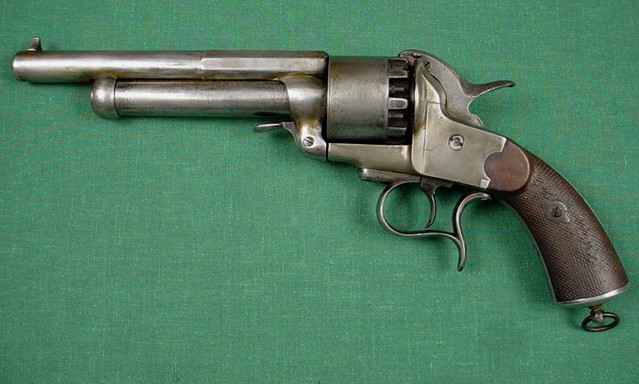
The first model has a round barrel with an octagonal section at the barrel lug; the ramrod is attached at the right side of the barrel, and they have a spur to the trigger guard. The butt plate is somewhat rounded, and has a classical type swivel ring. The main spring, located in the grip, is very short. Serial numbers range from 1 to 450 and the guns are also stamped with the Le Mat logo, being an L and an M in cursive letters in a circle.
THE SECOND MODEL
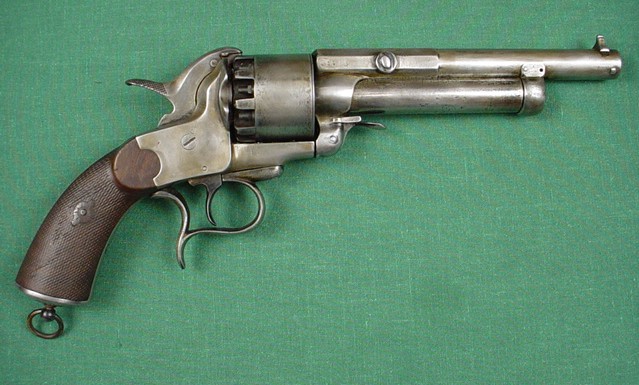
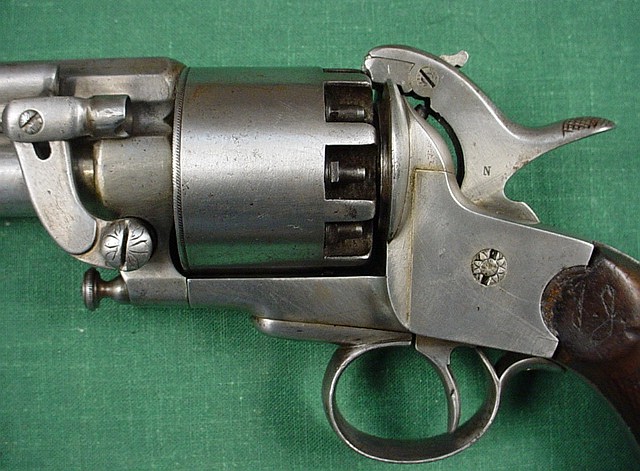
Following the changes advised by the Army, the second model has a full octagonal barrel, with the ramrod attached to the left side. It has the rounded trigger guard, and the swivel ring is integral with the butt plate. The Le Mat logo on these revolvers is the capitals L and M in block letters, surmounted by a five-point star. The main spring is far longer than on the first model, but all other features are identical. Serial numbers range from 950 to about 2500.
THE SO-CALLED "TRANSITION MODEL"
Serial numbers between 450 and 950 are revolvers made with parts of both 1st and 2nd model; some have the full octagon barrel mounted on a 1rst model frame, or any other combination. No satisfying explanation to this uncommon production has been found up to now.
There are five, or even six different markings found on Le Mat's barrels, as shown in the following pictures, wether they were produced in the USA, France or the UK.
ONE SINGLE revolver has bee found which bears a sixth type of marking, "LEMAT BREVET", along with the Liège proof stamps. The revolver is nearly in new condition, and it is very doubtful it has been used during the war. It is identical in all repects to all other Le Mats, and of the same quality. It has a quite high serial number.
It is impossible to say wether this revolver was a prototype, ordered by Le Mat to evaluate the quality of the Liège production, or if Liège gunmakers have produced Le Mat's revolver on behalf of the doctor. However, the fact the gun is fully finished and bears a serial number make some writers assume that there has been an actual modest production at Liège, that has been absorbed by the war.
A total of about 3,000 Le Mat's revolvers were made, but the exact number of them that reached the Confederacy is unknown. Paris-made serial numbers range from 1 to 2500; London-made range from 1 to 128, then one gun with the n° 5208 and then the numbers jump to the 8000 serial range. This is quite weird, knowing that only a few hundreds were manufactured in London.
Marcel
All these details and many more are in the site. See here : Confédérate revolvers Le Mat
Alain
Le Mat
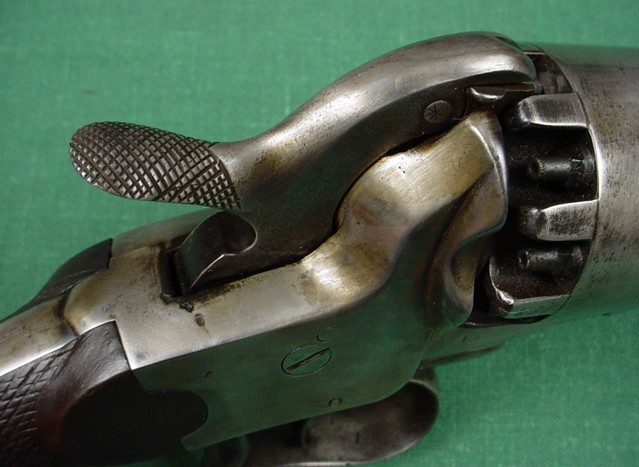
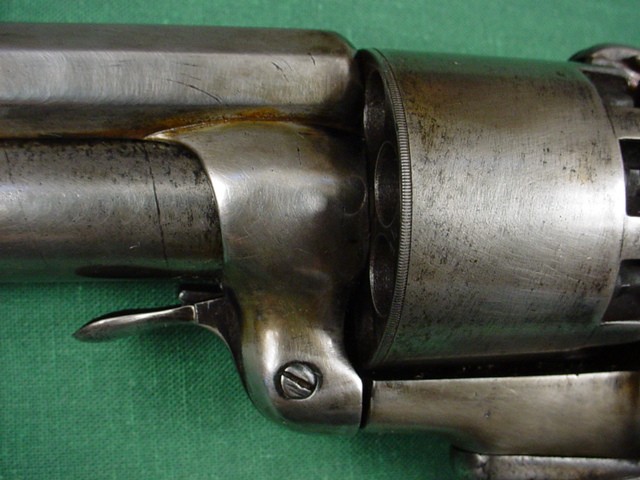
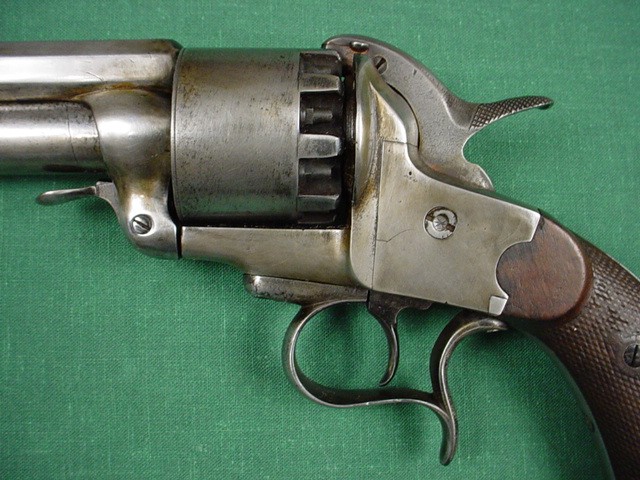
Le Mat first model percussion revolver.
Many thanks to "ANTIQUEFIREARMS" for the photos.
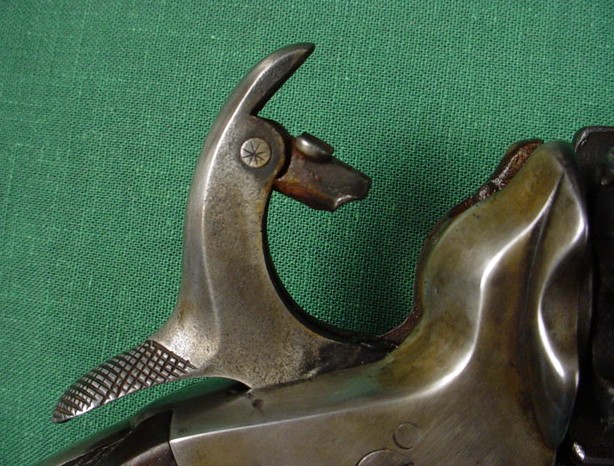
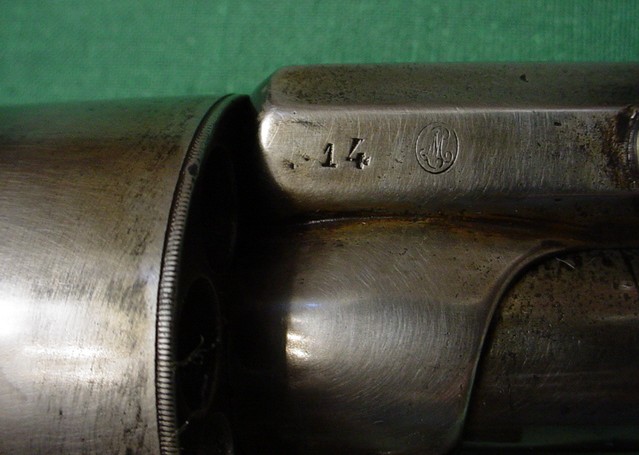
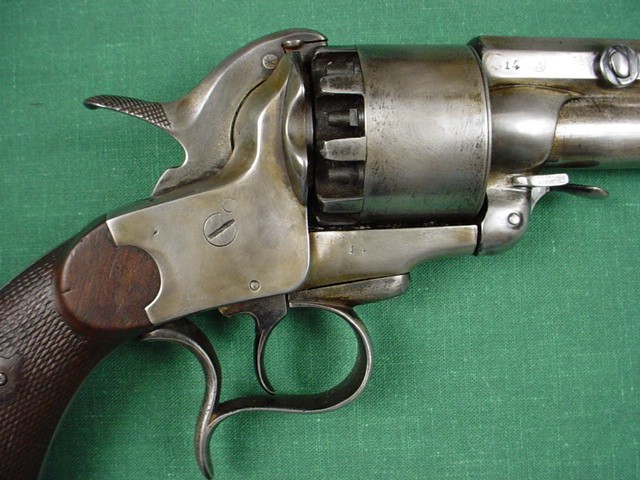
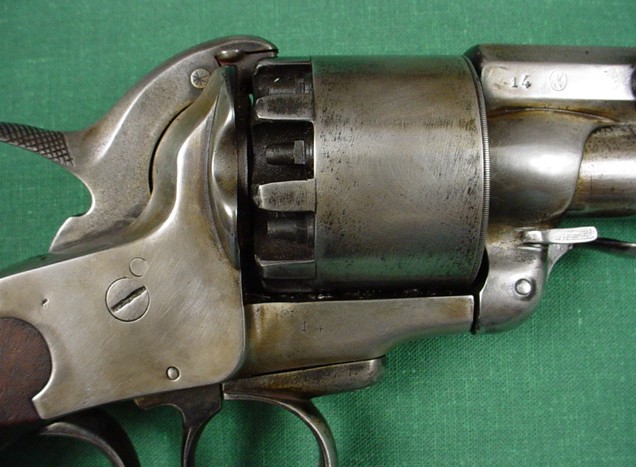
Le Mat
Second model.
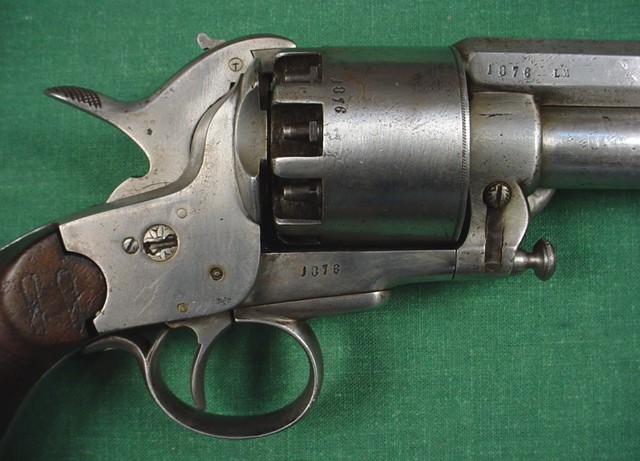
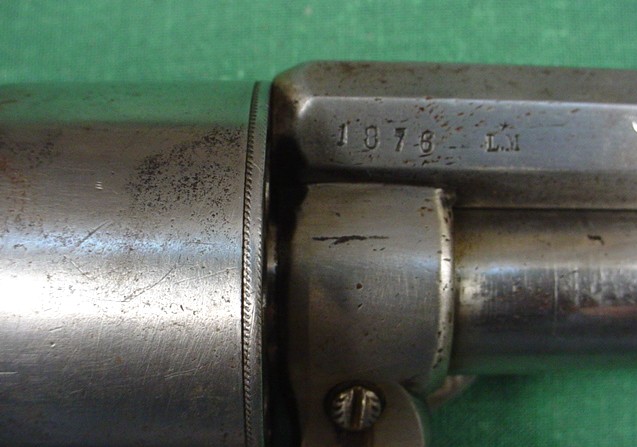
Le Mat
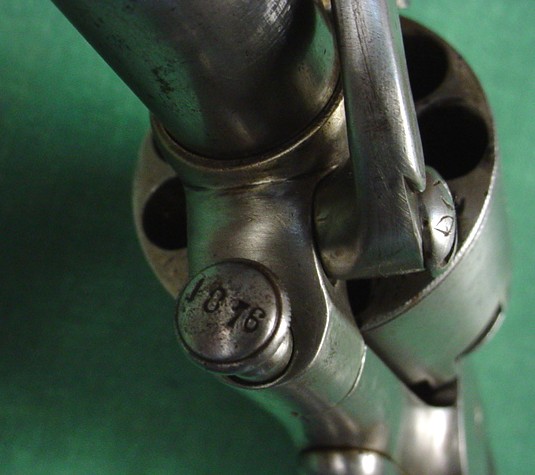
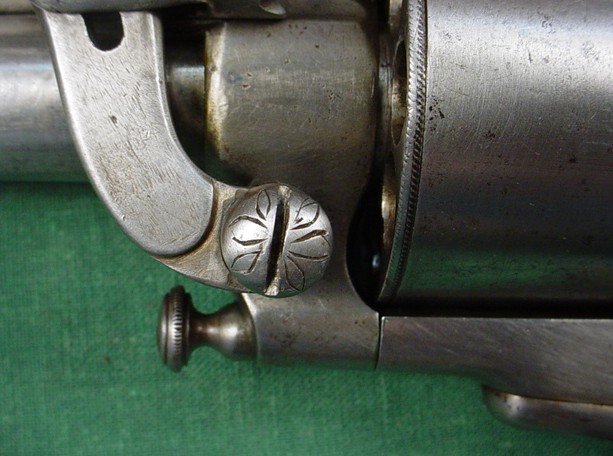
Le Mat Second Model Percussion Revolver
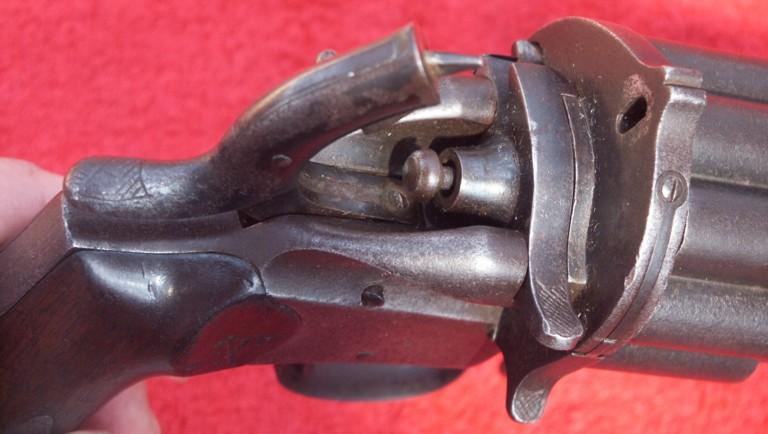
.41 caliber and .65 caliber smoothbore. 6¾" inch octagonal barrel marked Col Le Mat Bte. s.g.d.g. Paris, the base pin used an additional 5" shotgun barrel, the firing pin can be switched for hitting the pistons of the 9-shot-cylinder or the piston for the buck-shot barrel. Checkered walnut grips, the butt with fitting for lanyard ring.
Flayderman’s Guide: " it is known that a substantial number were purchased under direct C.S.A. contract. ..use by a few Confederate high ranking officers as a favorite personal handgun
Photopraphs friendly authorized by "HORST HELD"
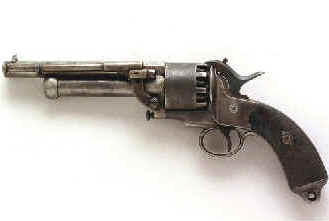
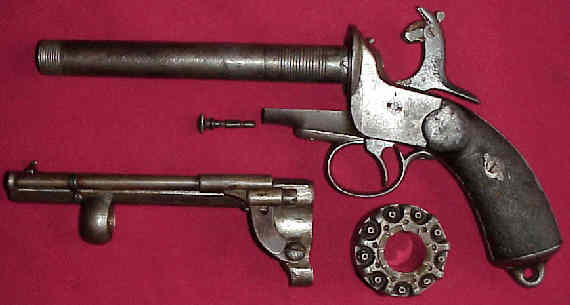
Le Mat
3rd model, centerfire.

Thanks to "IVES DEVOS" for the authorization to photograph.
Photos Littlegun
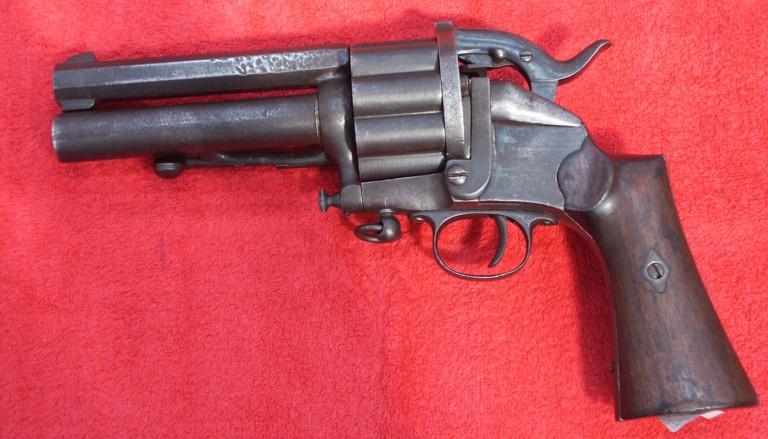
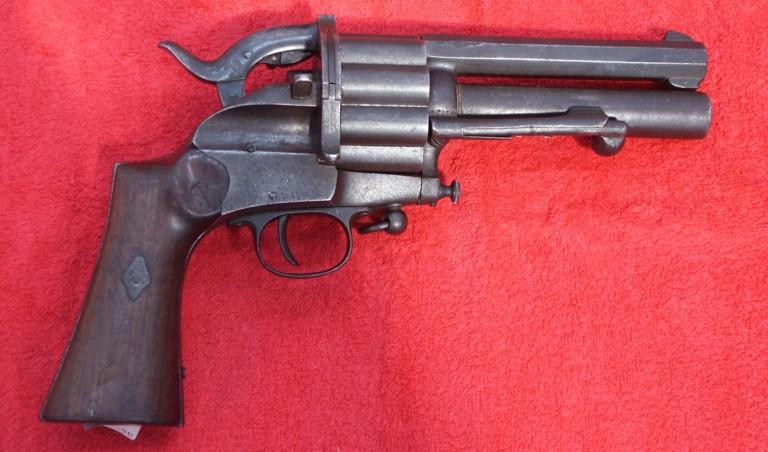
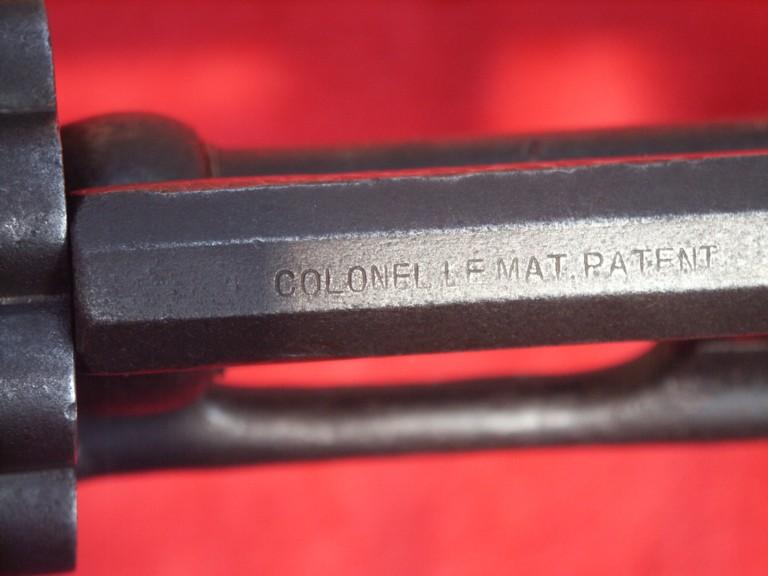
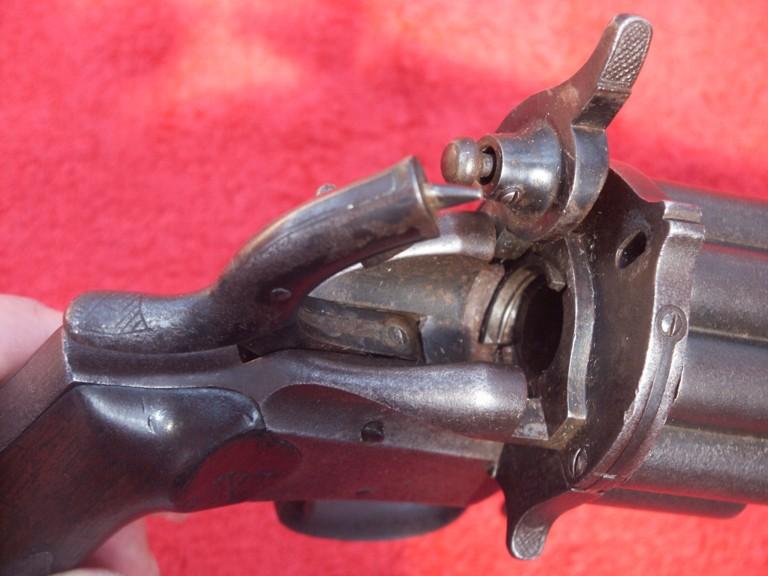
Another 3rd model